Retail expansion often comes with demanding deadlines. A new location may need to open ahead of a seasonal sales period, meet a lease commencement requirement, support entry into a new market, or align with a broader company growth strategy.
When timelines are tight, the construction process becomes a critical part of the expansion plan.
Fast-turn build-outs help retailers move from an approved site and defined project scope to a completed, operational store within a compressed schedule. Achieving this requires more than simply increasing labor or accelerating individual construction activities. It depends on early planning, coordinated procurement, trade partner availability, clear decision-making, and consistent project oversight.
A delayed permit, incomplete design package, unavailable fixture, or poorly coordinated trade can affect the entire opening schedule.
For retailers managing multiple locations, these challenges can become even more complex.
A successful fast-turn build-out brings the major project requirements together early, identifies potential constraints, and establishes a coordinated execution plan that keeps the project moving without compromising quality or safety.
What Is a Fast-Turn Retail Build-Out?
A fast-turn retail build-out is a construction project designed to complete a new retail space within a shortened or time-sensitive schedule.
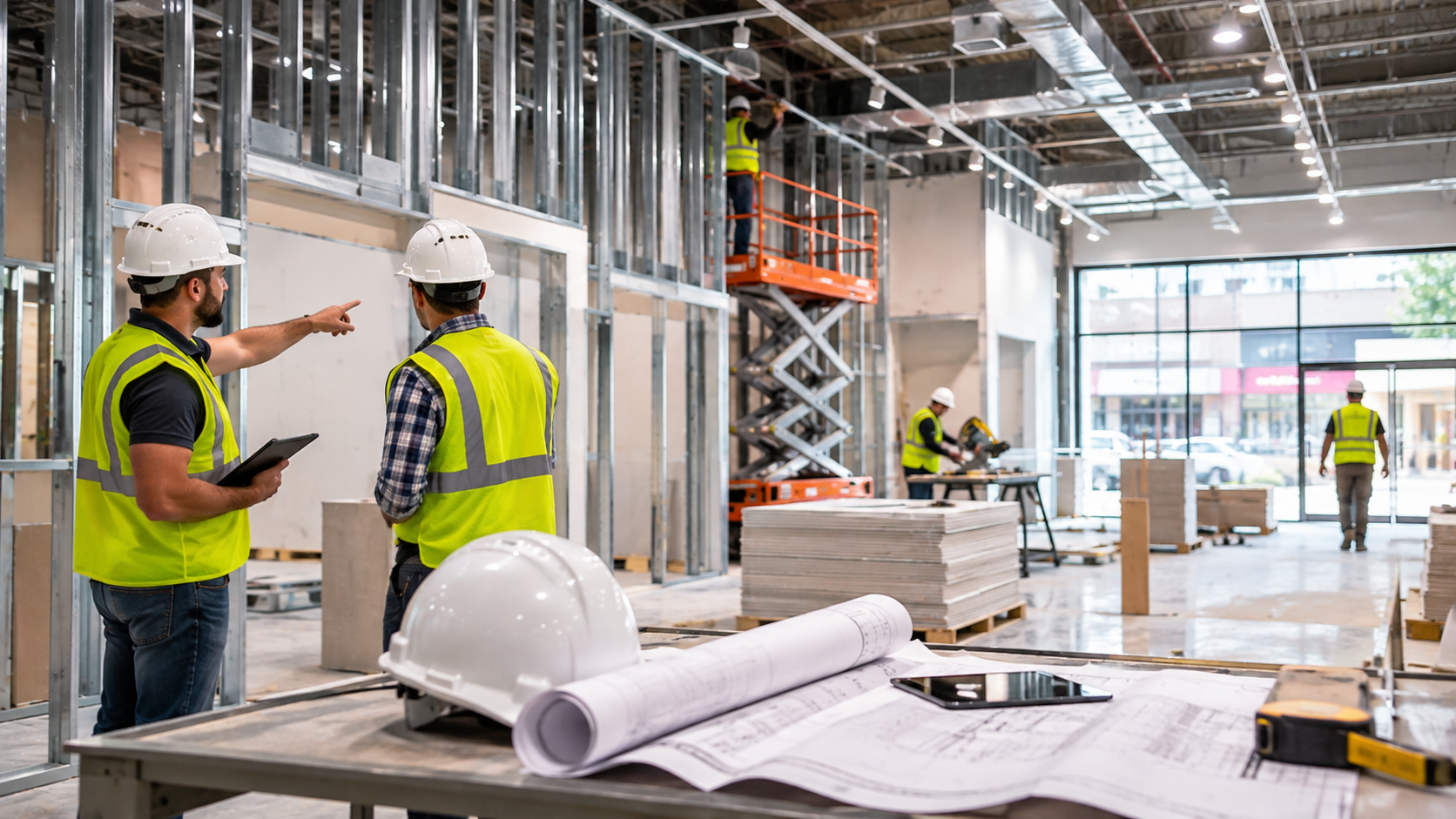
It typically involves converting an existing commercial space into a functional retail environment through coordinated construction, installation, and finishing activities.
Depending on the site and project scope, this may include:
-
Interior demolition and preparation
-
Framing and drywall installation
-
Flooring and ceiling work
-
Electrical and lighting installation
-
Mechanical and plumbing coordination
-
Fixture and millwork installation
-
Point-of-sale and technology infrastructure
-
Signage and branding elements
-
Final inspections and project closeout
The objective is to complete the required work in a carefully coordinated sequence so the retailer can prepare the location for opening.
Fast-turn build-outs may involve new retail spaces, previously occupied commercial properties, or existing facilities being converted to accommodate a different store format.
For a broader explanation of the construction process, see Retail Build-Outs Explained: From Shell to Store Opening.
Why Time-Sensitive Retail Expansions Require a Different Approach
Traditional construction schedules often provide more flexibility for planning, procurement, and field execution.
Time-sensitive retail expansions leave less room for delays.
The project team must coordinate multiple requirements early because decisions made during one phase can directly affect the next.
Common pressures include:
Lease and Occupancy Deadlines
Retailers may have contractual obligations tied to lease commencement, tenant improvement schedules, or occupancy dates.
Delays can create additional financial exposure and affect the broader expansion strategy.
Seasonal and Promotional Windows
Some stores must open before major shopping periods, promotional campaigns, or seasonal demand peaks.
Missing the target date may reduce the commercial value of the expansion.
Design and Approval Dependencies
Construction cannot always proceed until drawings, specifications, landlord approvals, and other required documentation are complete.
Late decisions can affect procurement and trade scheduling.
Material and Equipment Lead Times
Fixtures, millwork, lighting, electrical equipment, and specialized retail components may require advance ordering.
Waiting until construction begins to confirm these requirements can create unnecessary schedule pressure.
Limited Trade Availability
Fast-turn projects may require several subcontractors to complete work within overlapping timeframes.
Without early coordination, labor availability and scheduling conflicts can become major constraints.
These challenges reinforce the importance of structured planning and project management. See Why Project Management Matters in Retail Construction.
1. Start With Site Readiness and Scope Confirmation
A compressed construction schedule leaves little room for uncertainty.
Before mobilization, the project team should understand the existing site conditions, approved scope, construction requirements, and responsibilities of each party.
A thorough site assessment should evaluate:
-
Existing building conditions
-
Structural and architectural requirements
-
Electrical and mechanical infrastructure
-
Plumbing and utility availability
-
Ceiling heights and existing finishes
-
Access and material delivery routes
-
Landlord requirements
-
Permit and inspection requirements
-
Construction staging areas
-
Potential conflicts with existing systems
The purpose is to identify conditions that could affect the project before they become field problems.
Scope confirmation is equally important. The team should establish which activities are included, what materials and equipment are required, and which responsibilities belong to the general contractor, owner, landlord, or specialty trades.
Unresolved scope questions can create delays, change orders, and unnecessary rework.
For projects involving existing commercial spaces, Managing Non-Standard Retail Construction Projects provides additional context on handling unique site requirements.
2. Finalize Design and Approvals Early
Design coordination is one of the most important factors in a fast-turn build-out.
Construction teams need sufficiently complete and coordinated drawings before proceeding with activities that depend on specific dimensions, equipment locations, and building system requirements.
Important preconstruction items may include:
-
Architectural drawings
-
Construction details and specifications
-
Electrical plans
-
Mechanical and plumbing plans
-
Fixture and millwork layouts
-
Equipment schedules
-
Finish selections
-
Landlord approvals
-
Required permit documentation
The team should also identify long-lead decisions that could affect procurement or installation.
For example, changes to checkout counter layouts may affect electrical connections, data locations, flooring coordination, and fixture dimensions.
Resolving these decisions early helps prevent downstream conflicts.
When design changes are unavoidable, the project team should document their impact on cost, schedule, materials, and trade coordination before implementation.
3. Develop a Schedule Around Critical Activities
A fast-turn build-out requires more than a shortened version of a traditional construction schedule.
The schedule must reflect the actual dependencies between construction activities and identify which tasks directly affect the opening date.
A typical sequence may include:
1. Site assessment and scope confirmation
2. Design completion and approvals
3. Permitting and procurement
4. Site preparation and demolition
5. Framing and infrastructure work
6. Electrical, mechanical, and plumbing activities
7. Drywall, ceilings, and finishes
8. Flooring and fixture installation
9. Technology and equipment deployment
10. Inspections, testing, and punch list
11. Final cleaning and turnover
12. Store readiness and opening preparation
Some activities may overlap when conditions allow, but work should only be resequenced when the necessary preceding activities are complete and the work can be performed safely.
The project team should identify critical-path activities and establish realistic durations, milestone dates, and contingency allowances.
For additional guidance, see Planning for Compressed Construction Schedules.
4. Coordinate Procurement Before Mobilization
Material availability can determine whether a fast-turn project stays on schedule.
Waiting until construction is underway to order essential fixtures, equipment, or building materials can introduce delays that are difficult to recover.
Early procurement planning should identify:
-
Long-lead materials
-
Custom fixtures and millwork
-
Lighting and electrical equipment
-
Flooring and finish materials
-
Store equipment
-
Point-of-sale components
-
Network and security infrastructure
-
Signage and branded elements
The project team should confirm specifications, quantities, delivery dates, and receiving requirements.
Where practical, materials should be ordered early enough to support the construction schedule, with delivery coordinated around site readiness and available storage.
Material tracking should continue throughout the project. A confirmed purchase order does not necessarily mean an item is ready for installation.
For projects involving extensive fixture packages, see Fixture and Millwork Installation Best Practices.
5. Secure Trade Partners and Labor Resources Early
A compressed schedule requires the right people to be available at the right time.
General contractors must coordinate qualified subcontractors and field personnel according to the project sequence, scope, and geographic requirements.
Important considerations include:
-
Trade partner availability
-
Required licenses and qualifications
-
Labor capacity
-
Mobilization schedules
-
Site access requirements
-
Equipment availability
-
Work area coordination
-
Inspection readiness
Trade assignments should be established early, particularly for specialized work that could affect multiple downstream activities.
The project team should also identify potential scheduling conflicts before mobilization.
For example, ceiling installation may depend on completed overhead electrical and mechanical work. Fixture installation may depend on finished flooring and verified power and data locations.
Effective coordination helps prevent trades from working against one another or waiting for incomplete preceding activities.
6. Coordinate Electrical and Technology Requirements Early
Modern retail stores depend on integrated electrical and technology systems.
These requirements should be included in the initial build-out plan rather than treated as separate activities near the end of construction.
Depending on the store format, electrical and technology scopes may include:
-
Power distribution
-
Interior and exterior lighting
-
Dedicated equipment circuits
-
Checkout and POS power
-
Network infrastructure
-
Wireless access points
-
CCTV installation
-
Digital menu boards
-
Communications and data connections
-
Equipment testing and commissioning
Coordination is especially important when fixtures, checkout counters, displays, and equipment require specific power or data connections.
If these requirements are not verified before installation, the project may encounter costly adjustments or rework.
Related resources include:
7. Use Controlled Overlap to Accelerate Construction
One way to shorten a construction schedule is to allow certain activities to proceed concurrently rather than waiting for every preceding phase to finish.
However, overlapping work requires careful coordination.
Examples may include:
-
Procurement continuing while site preparation is underway
-
Off-site fixture fabrication progressing during interior construction
-
Electrical rough-in coordinated with framing activities
-
Equipment preparation occurring before final installation
-
Signage fabrication proceeding while interior finishes are completed
The project team must verify that overlapping activities do not create conflicts involving access, safety, quality, inspections, or incomplete preceding work.
The objective is to eliminate unnecessary waiting time, not to force activities into an unsafe or impractical sequence.
For a related discussion, see Fast-Track Retail Construction Program.
8. Establish Centralized Project Oversight
Fast-turn build-outs often involve multiple stakeholders working against the same opening deadline.
Without centralized oversight, project updates, approvals, procurement issues, and field decisions can become fragmented.
A centralized project management structure helps maintain visibility across the entire project.
It should provide:
-
A designated point of contact
-
Defined responsibilities
-
Regular schedule updates
-
Clear communication channels
-
Documented decisions
-
Issue escalation procedures
-
Progress reporting
-
Change management
-
Quality verification
-
Closeout tracking
Project managers should monitor progress against established milestones and identify issues that could affect the opening date.
When a delay occurs, the team should evaluate its impact on dependent activities and determine whether the schedule can be adjusted without compromising quality or safety.
For additional insight, see How Centralized Oversight Improves Consistency.
9. Maintain Quality and Safety Under Compressed Timelines
A shorter schedule should never mean fewer safety precautions or reduced quality expectations.
Rushing work without proper controls can result in installation deficiencies, rework, failed inspections, and safety incidents that ultimately delay project completion.
A fast-turn build-out should maintain established procedures for:
-
Site safety and hazard identification
-
Personal protective equipment
-
Work area separation
-
Material handling
-
Equipment operation
-
Inspection and testing
-
Installation verification
-
Deficiency tracking
-
Final acceptance
Quality checks should take place throughout construction rather than being postponed until the final walkthrough.
This allows the team to identify and correct deficiencies before they affect subsequent activities.
The project should also maintain appropriate safety controls when multiple trades are working simultaneously.
10. Plan for Inspections, Testing, and Reopening
Construction completion does not automatically mean a retail location is ready to open.
Before turnover, the project team must verify that the facility meets applicable requirements and that essential systems and equipment are ready for use.
Depending on the scope and jurisdiction, this may involve:
-
Required building inspections
-
Electrical inspections
-
Mechanical and plumbing inspections
-
Fire and life safety verification
-
Equipment testing
-
Lighting and power checks
-
Network and technology testing
-
Fixture and millwork inspections
-
Deficiency resolution
-
Final cleaning
-
Required documentation
-
Owner acceptance
The team should establish inspection and testing requirements early and coordinate them with the construction schedule.
Reopening readiness should also account for retailer activities such as merchandise stocking, employee training, equipment setup, and store merchandising.
These activities may occur alongside final construction closeout, but only when the facility and work areas are safe and approved for access.
Common Challenges That Delay Fast-Turn Retail Build-Outs
Even well-planned projects can encounter unexpected issues. The difference is often how quickly the team identifies and resolves them.
Incomplete Project Scope
Unclear responsibilities or missing details can lead to additional work, change orders, and schedule disruptions.
How to address it: Confirm the scope, drawings, specifications, and project responsibilities before mobilization.
Delayed Permits and Approvals
Construction activities may be restricted until required approvals are obtained.
How to address it: Identify jurisdictional requirements early and track permit submissions, reviews, and inspections as project milestones.
Long-Lead Material Delays
Fixtures, equipment, and specialized components may not arrive according to the original schedule.
How to address it: Identify long-lead items during preconstruction and establish procurement tracking and contingency plans.
Trade Scheduling Conflicts
Multiple subcontractors may need access to the same work areas or depend on the completion of other activities.
How to address it: Develop a coordinated schedule with clear work sequences, access requirements, and milestone responsibilities.
Late Design Changes
Changes after procurement or construction begins can create rework and affect dependent activities.
How to address it: Establish a formal change management process and evaluate schedule and cost impacts before approving revisions.
Incomplete Site Conditions
Existing building conditions may differ from the information provided during initial planning.
How to address it: Conduct thorough site assessments and verify critical dimensions, utilities, and existing infrastructure before finalizing the execution plan.
Delayed Inspections and Closeout
Incomplete documentation or unresolved deficiencies can prevent final acceptance.
How to address it: Schedule required inspections early, maintain current documentation, and track deficiencies throughout construction.
How to Measure Fast-Turn Build-Out Performance
A successful fast-turn project should be evaluated based on more than whether the store opened by its target date.
The team should also consider construction quality, safety, cost performance, and overall readiness.
| Performance Indicator | What It Measures |
| Schedule adherence | Performance against approved project milestones |
| Request-to-mobilization time | Time between project authorization and field mobilization |
| Procurement readiness | Availability of required materials before installation |
| Critical-path performance | Progress of activities that directly affect project completion |
| Budget performance | Actual costs compared with the approved budget |
| First-pass quality | Work accepted without corrective action |
| Rework frequency | Additional work required to resolve deficiencies |
| Safety performance | Compliance with established site safety requirements |
| Inspection readiness | Completion of work and documentation required for inspections |
| Closeout completion | Timely delivery of final documentation and acceptance |
Tracking these indicators helps project teams understand where time is being lost and which processes can be improved on future expansion projects.
Fast-Turn Build-Outs for Multi-Location Retail Expansion
When retailers are opening several locations, the challenges of fast-turn construction extend beyond individual job sites.
Each location may have different building conditions, permitting requirements, delivery constraints, and subcontractor availability.
A coordinated multi-site strategy helps connect these individual projects to the retailer’s broader expansion schedule.
Important considerations include:
Standardized project requirements: Establish common specifications, documentation, and quality expectations across locations.
Site-specific assessments: Identify local conditions and requirements that may affect construction.
Coordinated procurement: Align material orders and delivery schedules with each location’s readiness.
Resource planning: Allocate labor and trade partners according to project priorities and geographic requirements.
Centralized reporting: Maintain visibility into schedules, risks, budgets, and progress across the entire rollout.
Controlled flexibility: Allow approved adjustments when local conditions require a different execution approach.
This balance between common standards and site-specific execution is discussed in Standardization vs. Flexibility in Multi-Site Programs.
For retailers managing multiple expansion projects, Successful Multi-Site Rollout and Managing Large-Scale Retail Programs Nationwide provide additional guidance.
What to Look for in a General Contractor for Fast-Turn Retail Build-Outs
Selecting the right general contractor is an important part of meeting a demanding retail expansion schedule.
Retailers should evaluate more than a contractor’s ability to mobilize quickly. They should also consider whether the organization has the project management structure, resources, and experience to coordinate the complete build-out.
Important qualifications include:
Relevant Retail Construction Experience
The contractor should understand retail layouts, fixtures, finishes, equipment requirements, and the operational considerations involved in opening a store.
Strong Preconstruction Capabilities
The team should be able to review existing conditions, identify scope gaps, coordinate drawings, and anticipate potential project constraints.
Established Trade Partner Resources
Qualified and available subcontractors are essential to executing multiple construction activities within a compressed schedule.
Procurement and Logistics Coordination
The contractor should have a process for tracking materials, coordinating deliveries, and addressing long-lead requirements.
Centralized Project Management
A clear management structure helps ensure that schedules, communications, approvals, and field activities remain aligned.
Quality and Safety Procedures
Fast execution should be supported by documented safety practices, inspection procedures, and consistent quality expectations.
Geographic Coverage
For retailers expanding into multiple states, licensing coverage and the ability to coordinate local requirements are important considerations.
For more information, see Benefits of Working With One Nationwide General Contractor and Nationwide General Contractor Guide.
How Prime Retail Services Supports Time-Sensitive Retail Build-Outs
Prime Retail Services is a nationwide commercial general contractor supporting construction, renovation, and multi-location programs across retail and other commercial environments.
Our approach emphasizes coordinated planning, centralized project oversight, and disciplined field execution.
For time-sensitive retail expansions, successful delivery depends on aligning the project scope, schedule, procurement, trade partners, and site requirements before and during construction.
Our capabilities include:
-
Build-Outs and Store Refreshes: Coordinated construction and improvements within commercial facilities.
-
Remodels and Renovations: Construction activities designed around existing building conditions and operational requirements.
-
Special Project Rollouts: Coordinated execution for time-sensitive construction needs.
-
Multi-Site FF&E Programs: Management of fixture, furniture, and equipment installations across multiple locations.
-
Electrical Coordination: Additional project capabilities through Prime Power Solutions.
-
Technology Deployment: Technology installation and infrastructure support through Prime-Net.
Through our proprietary 3P Process, Perfect, Project, Process, we emphasize execution quality, project coordination, and repeatable procedures that support consistent project delivery.
With general contracting licenses in 49 states, excluding Hawaii, Prime Retail Services supports commercial construction requirements across a broad geographic footprint.
Our focus is to help clients coordinate construction activities, manage project requirements, and move retail expansion projects toward completion with the planning and oversight needed to support their business objectives.
Frequently Asked Questions
What is a fast-turn retail build-out?
A fast-turn retail build-out is a construction project designed to complete a new or repurposed retail space within a shortened schedule. It requires coordinated planning, procurement, labor, construction activities, inspections, and closeout.
How long does a fast-turn retail build-out take?
There is no standard duration. The schedule depends on the size of the facility, existing conditions, construction scope, design readiness, permitting, material lead times, and required inspections.
How can retailers accelerate a store build-out?
Retailers can improve schedule performance by finalizing scope and design early, identifying long-lead materials, securing qualified trade partners, coordinating construction activities, and maintaining centralized project oversight.
What causes delays in fast-turn retail construction?
Common causes include incomplete designs, delayed approvals, permit issues, material shortages, trade scheduling conflicts, unexpected site conditions, late changes, and unresolved deficiencies.
Can multiple construction activities happen at the same time?
Yes, when the work can be safely and properly coordinated. Activities such as off-site fabrication, procurement, and selected construction tasks may overlap, provided that dependencies and quality requirements are respected.
Does a compressed construction schedule affect quality?
It should not. A well-managed fast-turn project maintains the same quality and safety expectations while improving coordination, reducing unnecessary waiting time, and resolving issues earlier.
Why is procurement important in fast-turn build-outs?
Materials and equipment must be available when scheduled installation activities begin. Early procurement planning helps identify long-lead items and reduce the risk of material-related delays.
What is the difference between a fast-turn build-out and a fast-track construction project?
A fast-turn build-out focuses on completing a retail space within a demanding opening schedule. Fast-track construction is a broader scheduling strategy that may overlap design, procurement, and construction activities to shorten overall project duration.
Can one general contractor manage multiple retail build-outs across different states?
Yes, provided the contractor has the appropriate licensing coverage, qualified personnel, trade partner resources, and project management capabilities to support the locations. Local requirements must still be evaluated for each project.
What should be completed before a retail store opens?
The project should meet applicable inspection and approval requirements, essential systems should be tested, deficiencies should be resolved, and the facility should be ready for safe occupancy and normal operations.
Final Thoughts
Fast-turn retail build-outs require more than a compressed construction schedule. They demand early coordination, clear project requirements, reliable procurement, qualified trade partners, and consistent oversight.
When these elements are aligned, retailers can reduce unnecessary delays and create a more organized path from site preparation to store opening.
The objective is not simply to complete construction faster. It is to deliver a retail environment that meets the required standards, supports business operations, and is ready for customers when the expansion strategy calls for it.
For retailers working against demanding opening dates, the right construction partner and execution plan can make a meaningful difference.
Planning a time-sensitive retail expansion?
Contact Prime Retail Services at info@primeretailservices.com to discuss your next commercial build-out or multi-location construction program.