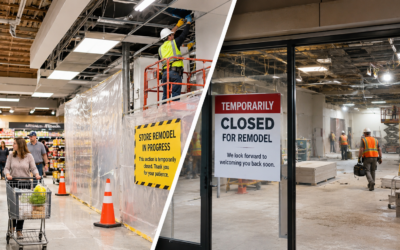

Nationwide construction rollouts require more than a well-defined scope and an aggressive schedule. They depend on having the right people available in the right markets at the right time.
For general contractors managing multi-location retail and commercial projects, workforce availability can become one of the biggest constraints to successful execution. A program may involve dozens of locations, overlapping schedules, different construction requirements, and multiple trades working across several states.
As the number of active projects increases, the ability to scale field crews quickly becomes essential.
However, adding workers without a coordinated deployment strategy can create new problems. Inconsistent installation practices, insufficient supervision, scheduling conflicts, safety concerns, and uneven workmanship can undermine the entire program.
Successful workforce scaling requires a structured approach that combines labor forecasting, qualified trade partner networks, regional resource planning, standardized onboarding, and centralized project management.
The objective is not simply to increase crew size. It is to expand field capacity while maintaining consistent execution across every location.
Why Crew Scaling Matters in Nationwide Construction Rollouts
A nationwide rollout may begin with a small group of locations before expanding into a much larger deployment.
The construction team must be prepared to increase labor capacity as project volume grows, sometimes within a relatively short period.
This can be challenging when several locations require work simultaneously.
Common workforce demands include:
-
Multiple crews working in different states
-
Overlapping construction schedules
-
Specialized trade requirements
-
Limited availability of qualified workers
-
Regional labor market differences
-
Travel and mobilization coordination
-
Site-specific safety and access requirements
-
Consistent supervision and quality control
Without sufficient workforce planning, project schedules can become difficult to maintain.
For example, a contractor may have enough labor to complete five locations but lack the capacity to execute twenty locations within the same timeframe.
Scaling requires the ability to anticipate these demands and establish the resources necessary to support them.
For a broader look at managing these programs, see Managing Large-Scale Retail Programs Nationwide.
1. Forecast Labor Requirements Before the Rollout Begins
The first step in scaling crews is understanding how much labor the program will actually require.
Waiting until projects are ready to mobilize can leave the contractor competing for workers and trade partners at the last minute.
Labor forecasting should begin during preconstruction.
The project team should evaluate:
-
Number of locations in the rollout
-
Construction scope at each site
-
Estimated labor hours
-
Required trades and specialties
-
Planned project durations
-
Number of simultaneous projects
-
Geographic distribution
-
Expected mobilization dates
-
Anticipated schedule overlaps
Not every location will require the same crew size or skill set.
A store refresh involving fixture replacement may require a different workforce than a complete interior build-out involving demolition, framing, electrical work, and finish installation.
The team should therefore develop labor estimates based on actual scope rather than applying one standard crew size to every location.
A workforce forecast should also account for peak demand periods, potential schedule changes, and contingency resources.
This creates a clearer picture of the labor capacity needed throughout the program.
2. Build a Reliable Network of Regional Trade Partners
One of the most practical ways to scale field capacity is to establish relationships with qualified regional subcontractors and trade partners.
A contractor managing projects across multiple states may not be able to rely on one permanent workforce for every location.
Regional trade partners can provide access to local labor, specialized expertise, and resources closer to the jobsite.
A well-developed network may include:
-
General construction crews
-
Carpenters and fixture installers
-
Electrical contractors
-
Mechanical and plumbing contractors
-
Drywall and framing crews
-
Flooring installers
-
Painting and finishing crews
-
Low-voltage and technology installation teams
-
Specialty equipment installers
However, having a list of potential subcontractors is not the same as having a deployment-ready network.
Trade partners should be evaluated based on:
-
Relevant commercial construction experience
-
Licensing and registration requirements
-
Insurance and bonding
-
Safety performance
-
Available workforce capacity
-
Geographic coverage
-
References and past performance
-
Ability to meet project schedules
-
Quality control procedures
-
Communication and reporting capabilities
The contractor should also understand each partner’s actual capacity before assigning multiple locations.
A qualified subcontractor may be suitable for one project but unable to support several simultaneous deployments.
For additional perspective, see Benefits of Working With One Nationwide General Contractor.
3. Organize Workforce Resources by Region
A nationwide rollout becomes more manageable when labor resources are organized geographically.
Instead of treating every location as an isolated assignment, project managers can group locations into regional deployment areas.
For example, a rollout may be organized into:
-
Northeast
-
Southeast
-
Midwest
-
Southwest
-
West
The actual regional structure should reflect the project’s geographic footprint, labor availability, travel requirements, and scheduling needs.
Regional planning can help improve:
Mobilization efficiency: Assign crews closer to project locations whenever practical.
Travel coordination: Reduce unnecessary long-distance travel and associated expenses.
Resource availability: Identify regional labor shortages before they affect the schedule.
Trade partner coordination: Establish relationships with subcontractors familiar with local markets.
Schedule flexibility: Shift resources between nearby locations when project conditions change.
Regional deployment also makes it easier to identify where additional workforce capacity is needed.
A centralized project management team can maintain oversight while regional resources handle field execution.
4. Create a Standardized Crew Onboarding Process
Scaling quickly should not mean lowering qualification requirements.
Every worker and trade partner must understand the project’s scope, safety expectations, communication procedures, and quality standards before beginning work.
A standardized onboarding process helps ensure that new crews can integrate into the program without creating unnecessary confusion.
Depending on the project, onboarding requirements may include:
-
Scope of work review
-
Project drawings and specifications
-
Site access procedures
-
Safety orientation
-
Required personal protective equipment
-
Applicable licenses and qualifications
-
Insurance documentation
-
Reporting requirements
-
Quality expectations
-
Emergency procedures
-
Schedule and milestone requirements
The project team should also communicate who is responsible for field supervision, approvals, issue escalation, and daily coordination.
For recurring programs, standardized onboarding materials can reduce the time needed to prepare new crews for deployment.
The objective is to make expectations clear before work begins rather than correcting misunderstandings after mobilization.
5. Match Crew Size and Skill Sets to Each Project
Adding more workers does not automatically increase productivity.
Crew composition should reflect the work being performed, the available work area, equipment requirements, and the sequence of construction activities.
An oversized crew working in a limited space can create congestion and reduce efficiency.
An undersized crew may struggle to meet the required schedule.
Before assigning resources, project managers should consider:
-
Scope complexity
-
Required trade qualifications
-
Estimated production rates
-
Available work areas
-
Equipment and material availability
-
Work sequencing
-
Site access restrictions
-
Safety requirements
-
Required completion milestones
For example, a fixture installation project may require experienced installers supported by general labor for material handling and preparation.
An electrical upgrade may require appropriately licensed electrical personnel, with other construction activities coordinated around their work.
Crew assignments should be adjusted as the project progresses.
This helps ensure that labor resources remain aligned with actual field requirements.
6. Establish a Flexible Workforce Deployment Strategy
Nationwide rollouts rarely proceed exactly as originally scheduled.
A permit may be delayed, a material delivery may arrive early, or one location may become ready before another.
A flexible deployment strategy allows project managers to adjust crew assignments without disrupting the broader program.
This may involve:
-
Maintaining backup trade partner capacity
-
Identifying alternate crews for critical activities
-
Grouping nearby projects
-
Establishing standby resources where justified
-
Adjusting deployment dates
-
Reassigning available crews to ready locations
-
Coordinating schedule changes with suppliers and subcontractors
However, workforce flexibility should operate within a controlled process.
Changes to crew assignments must account for qualifications, site requirements, travel time, work authorization, and project supervision.
The objective is to respond to changing conditions while maintaining clear accountability.
For projects with demanding mobilization requirements, see Rapid Mobilization for Time-Sensitive Special Projects.
7. Standardize Work Methods Across All Crews
One of the biggest risks associated with rapid workforce expansion is inconsistent field execution.
Different crews may have different work habits, installation methods, documentation practices, and interpretations of project requirements.
Without clear standards, these differences can create variations in quality across locations.
A standardized execution framework should define:
-
Approved construction drawings
-
Scope and installation requirements
-
Material specifications
-
Work sequencing
-
Quality checkpoints
-
Inspection procedures
-
Documentation requirements
-
Deficiency reporting
-
Final acceptance criteria
Standardization helps new crews understand how work should be performed and evaluated.
It also allows project managers to compare results across different locations.
Importantly, standardized procedures should still allow approved adjustments when actual site conditions differ from the original plans.
This balance is discussed in Standardization vs. Flexibility in Multi-Site Programs.
For projects involving fixtures and custom components, Fixture and Millwork Installation Best Practices provides additional guidance on maintaining installation consistency.
8. Maintain Strong Field Supervision and Quality Control
As the number of crews increases, maintaining adequate supervision becomes more important.
Project managers cannot assume that every location will produce consistent results simply because crews have received the same instructions.
Field oversight helps verify that work follows approved plans, safety requirements, and quality expectations.
Depending on the program, supervision may include:
-
Regional field supervisors
-
Site-specific project managers
-
Trade foremen
-
Quality control personnel
-
Safety representatives
-
Centralized project management support
The supervision structure should reflect project size, complexity, geographic distribution, and risk.
Quality control procedures may include:
-
Scheduled site inspections
-
Installation verification
-
Progress photographs
-
Daily field reports
-
Deficiency tracking
-
Material inspections
-
Final walkthroughs
-
Closeout documentation
Issues should be identified and addressed as early as possible.
When the same deficiency appears across several locations, the program team should investigate whether it reflects a broader training, specification, or process issue.
Centralized oversight is particularly important when multiple crews are working under the same program requirements.
See How Centralized Oversight Improves Consistency.
9. Coordinate Labor With Materials, Equipment, and Site Readiness
Crew availability is only one part of successful mobilization.
Workers cannot perform efficiently if materials are missing, equipment is unavailable, or the site is not ready.
A deployment plan should align labor schedules with procurement, delivery logistics, and site readiness.
Before mobilizing a crew, the project team should verify:
-
Approved scope and drawings
-
Required permits and approvals
-
Site access authorization
-
Material availability
-
Equipment readiness
-
Work area preparation
-
Utility availability
-
Preceding trade completion
-
Safety requirements
-
Required inspections or hold points
Mobilizing workers before these conditions are met can result in downtime, unnecessary travel expenses, and schedule disruption.
This is particularly important for multi-location programs where crews may be traveling between different markets.
A coordinated approach helps ensure that labor is deployed when meaningful work can begin.
10. Use Centralized Scheduling and Workforce Reporting
Managing crew assignments through separate spreadsheets, informal messages, or disconnected project updates can become difficult as the rollout expands.
A centralized scheduling and reporting structure provides better visibility into labor availability and project progress.
Useful information to monitor includes:
-
Crew assignments by location
-
Trade partner availability
-
Scheduled mobilization dates
-
Actual crew arrival dates
-
Labor hours
-
Production progress
-
Schedule performance
-
Outstanding site requirements
-
Safety observations
-
Quality deficiencies
-
Upcoming resource requirements
A centralized dashboard or project management platform can help teams identify conflicts and make adjustments earlier.
For example, if two locations require the same specialized trade partner during overlapping periods, project managers can identify the conflict before it affects either schedule.
Consistent reporting also helps leadership understand whether workforce capacity is sufficient for upcoming rollout phases.
For more on managing program-wide schedules and resources, see Nationwide Construction Program Management.
11. Account for Licensing, Safety, and Local Requirements
Rapid workforce deployment must remain compliant with the requirements of each project location.
Nationwide construction programs may involve different state and local regulations, licensing classifications, registration requirements, and inspection procedures.
Contractors should verify that the companies and individuals performing regulated work meet the applicable requirements.
This is particularly important for specialty trades such as electrical, mechanical, and plumbing work.
Workforce planning should also account for:
-
Required contractor licenses
-
Local registrations
-
Worker qualifications
-
Insurance requirements
-
Site-specific safety orientations
-
Applicable OSHA requirements
-
Personal protective equipment
-
Equipment operator qualifications
-
Emergency response procedures
-
Required permits and inspections
A worker or subcontractor qualified for one scope or jurisdiction should not automatically be assumed qualified for another.
Safety expectations must remain consistent as crews are added or reassigned.
A compressed schedule is not a reason to bypass required training, supervision, or protective measures.
12. Plan for Surge Capacity During Peak Rollout Periods
Some nationwide programs experience significant increases in workforce demand during specific periods.
A retailer may need to complete multiple store openings before a seasonal deadline or execute a large number of renovations within a limited window.
These periods require additional planning.
A surge capacity strategy identifies how the contractor will increase available labor when demand exceeds its normal operating capacity.
Possible measures include:
-
Prequalified backup subcontractors
-
Additional regional trade partners
-
Temporary increases in crew availability
-
Staggered mobilization schedules
-
Flexible project sequencing
-
Additional field supervision
-
Extended work schedules when approved
-
Contingency labor allocations
Surge capacity should be established before the peak period begins.
Waiting until the program is already behind schedule can make it difficult to secure qualified resources.
The contractor should also verify that additional crews can be supported by sufficient materials, equipment, supervision, and site access.
Common Mistakes When Scaling Crews for Nationwide Rollouts
Rapid workforce expansion can create operational problems when planning and oversight are insufficient.
Hiring or Assigning Workers Without Verifying Qualifications
Adding labor without confirming relevant experience, licensing, training, or insurance can create compliance and quality risks.
Better approach: Establish qualification requirements and verify credentials before deployment.
Overcommitting Trade Partners
A subcontractor may agree to support a large rollout without having enough available workers to meet every scheduled assignment.
Better approach: Confirm actual labor capacity and maintain backup resources for critical scopes.
Mobilizing Before Sites Are Ready
Sending crews to locations with incomplete approvals, missing materials, or unresolved site conditions can create unnecessary downtime.
Better approach: Use a documented site readiness checklist before mobilization.
Expanding Without Increasing Supervision
Additional crews increase the need for field coordination and quality verification.
Better approach: Scale supervision and reporting alongside workforce capacity.
Using Inconsistent Installation Methods
Different crews may interpret specifications differently.
Better approach: Establish standardized work procedures, training materials, and inspection criteria.
Ignoring Geographic and Travel Constraints
A crew may be available but located too far from the assigned project to support the schedule efficiently.
Better approach: Organize labor resources by region and account for travel, lodging, and mobilization requirements.
Focusing on Crew Size Instead of Productivity
A larger workforce does not guarantee faster completion.
Better approach: Match crew composition and staffing levels to the actual scope, work area, and production requirements.
How to Measure Workforce Scaling Performance
A nationwide rollout should track workforce performance alongside overall project results.
Consistent reporting helps identify whether labor resources are being deployed effectively and where adjustments may be necessary.
| Performance Indicator | What It Measures |
| Time to mobilization | Time between assignment approval and crew deployment |
| Crew readiness | Percentage of assigned crews meeting project requirements before arrival |
| Labor availability | Available qualified workers compared with forecast demand |
| Schedule adherence | Completion of assigned work within planned milestones |
| Labor productivity | Completed work compared with planned labor hours |
| Crew utilization | Productive time compared with available scheduled time |
| First-pass quality | Work accepted without corrective action |
| Rework frequency | Additional labor required to resolve deficiencies |
| Safety performance | Compliance with project safety requirements |
| Resource coverage | Ability to meet workforce demand across planned locations |
These indicators help project managers evaluate whether workforce scaling is supporting the program or introducing new inefficiencies.
What to Look for in a General Contractor for Nationwide Crew Deployment
Selecting a contractor for a nationwide rollout requires evaluating more than its ability to provide labor.
The contractor should have the organizational structure, trade partner relationships, and project management capabilities to coordinate workforce deployment across multiple markets.
Consider the following:
Regional workforce coverage: Does the contractor have access to qualified crews and trade partners in the markets where the projects will take place?
Labor forecasting: Can the team estimate workforce demand based on scope, location, and schedule?
Trade partner qualification: Are subcontractors evaluated for experience, licensing, insurance, safety, and available capacity?
Mobilization capabilities: Can crews be assigned and deployed according to project priorities?
Field supervision: Does the contractor have a plan for monitoring work across multiple locations?
Quality control: Are standardized procedures and inspection requirements established?
Safety management: Can the contractor maintain consistent safety expectations as the workforce expands?
Centralized project management: Can the team coordinate schedules, resources, reporting, and issue resolution across the entire program?
Scalability: Can the contractor adjust its deployment resources as the number of locations and project requirements change?
The right construction partner should be able to explain how it scales resources while maintaining control over execution.
How Prime Retail Services Supports Nationwide Rollouts
Prime Retail Services is a nationwide commercial general contractor supporting construction, renovation, and multi-location programs across retail and other commercial environments.
Nationwide rollouts require coordinated labor resources, qualified trade partners, centralized project management, and consistent field execution.
Our approach emphasizes aligning workforce requirements with project schedules, site readiness, and the specific construction needs of each location.
Our capabilities include:
-
Remodels and Renovations: Coordinated construction activities within existing commercial facilities.
-
Build-Outs and Store Refreshes: Execution of commercial improvements and new space development.
-
Special Project Rollouts: Coordinated deployment for time-sensitive construction requirements.
-
Multi-Site FF&E Programs: Management of fixture, furniture, and equipment installations across multiple locations.
-
Electrical Coordination: Additional project capabilities through Prime Power Solutions.
-
Technology Deployment: Technology installation and infrastructure support through Prime-Net.
Through our proprietary 3P Process, Perfect, Project, Process, we emphasize execution quality, project coordination, and repeatable procedures that support consistent project delivery.
With general contracting licenses in 49 states, excluding Hawaii, Prime Retail Services supports commercial construction requirements across a broad geographic footprint.
Our focus is to help clients coordinate resources, manage field execution, and maintain visibility across multi-location construction programs.
Frequently Asked Questions
How do general contractors scale crews for nationwide rollouts?
General contractors typically combine labor forecasting, regional trade partner networks, standardized onboarding, centralized scheduling, and field supervision to increase workforce capacity across multiple markets.
Why is regional workforce planning important?
Regional planning helps contractors identify available labor closer to project locations, coordinate travel, reduce unnecessary mobilization, and respond more effectively to changing schedules.
Should contractors use subcontractors for nationwide construction programs?
Qualified subcontractors can provide access to specialized skills and local labor resources. Their experience, licensing, insurance, safety practices, and available capacity should be evaluated before assignment.
How quickly can crews be mobilized for a nationwide rollout?
Mobilization time depends on workforce availability, project scope, licensing requirements, site readiness, material availability, and geographic conditions. A prequalified trade partner network can help reduce preparation time.
How can contractors maintain consistent quality when using multiple crews?
Standardized work procedures, clear project documentation, training, field supervision, inspection checklists, and centralized reporting help maintain consistent expectations across locations.
How do contractors prevent labor shortages during large rollouts?
Labor forecasting, early trade partner engagement, regional resource planning, backup subcontractors, and surge capacity arrangements help reduce the risk of workforce shortages.
Does adding more workers always accelerate construction?
No. Productivity depends on the scope, available work area, construction sequence, equipment, materials, and supervision. Excessive staffing can create congestion and coordination problems.
What should be verified before mobilizing a crew?
The team should confirm site readiness, approved scope, required permits, worker qualifications, licensing requirements, materials, equipment, access, and safety procedures.
How can retailers evaluate a contractor’s workforce capacity?
Retailers can review the contractor’s regional coverage, trade partner network, labor forecasting process, mobilization history, field supervision structure, safety program, and experience managing simultaneous projects.
What is surge capacity in construction?
Surge capacity refers to the ability to increase available labor and supporting resources during periods of unusually high project demand. It may involve backup subcontractors, additional regional crews, and flexible deployment arrangements.
Final Thoughts
Scaling crews quickly for nationwide rollouts requires more than expanding the number of workers assigned to a project.
It requires a coordinated workforce strategy that connects labor forecasting, regional trade partner networks, standardized onboarding, scheduling, supervision, and quality control.
As construction programs expand across multiple markets, these processes become increasingly important to maintaining consistent execution.
The objective is to increase workforce capacity without losing visibility, accountability, safety, or control over project outcomes.
With the right deployment strategy and project management structure, general contractors can support growing construction programs while maintaining the standards clients expect at every location.
Planning a nationwide construction rollout?
Contact Prime Retail Services at info@primeretailservices.com to discuss your next multi-location commercial construction program.