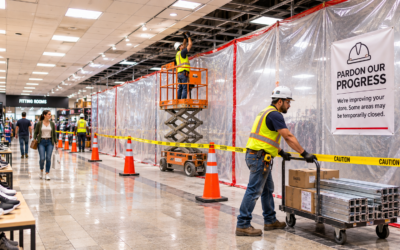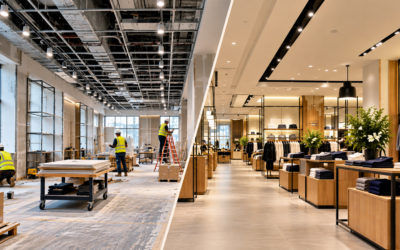

Managing a multi-site retail construction program requires more than repeating the same scope of work across multiple locations. Every store must reflect the brand’s standards, meet operational requirements, and deliver a consistent customer experience. At the same time, each location may present different site conditions, permitting requirements, building constraints, and scheduling challenges.
This creates a central challenge for multi-site programs: how do you standardize execution without sacrificing the flexibility each location needs?
Too much standardization can create problems when a store’s existing conditions differ from the original plan. Too much flexibility can introduce inconsistent finishes, scope variations, cost overruns, and unpredictable project schedules. The most effective programs establish clear standards for what must remain consistent while defining where adjustments are acceptable.
For retailers planning nationwide remodels, renovations, refreshes, or new store build-outs, this balance is essential to maintaining brand consistency, controlling costs, and delivering projects at scale.
What Is Standardization in a Multi-Site Program?
Standardization is the practice of establishing consistent requirements, processes, materials, and quality expectations across multiple project locations.
In retail construction, these standards may include:
- Design and brand standards: Approved layouts, finishes, fixtures, signage, lighting, and customer-facing elements.
- Scopes of work: Defined construction activities, installation requirements, and project deliverables.
- Materials and procurement: Approved products, specifications, vendors, and substitution procedures.
- Project management: Consistent schedules, reporting formats, communication protocols, and approval workflows.
- Quality control: Standard inspection criteria, punch list procedures, and closeout documentation.
Standardization creates a repeatable framework for executing projects across different markets. Instead of developing a new approach for every store, teams work from an established set of requirements.
For retailers managing dozens or hundreds of locations, this repeatability can improve coordination, simplify procurement, and make performance easier to measure.
However, standardization should not mean assuming every store is identical. Existing buildings, local codes, landlord requirements, and operating conditions can vary considerably from one location to another.
What Is Flexibility in a Multi-Site Program?
Flexibility is the ability to adapt project execution to the conditions of an individual location without compromising the program’s essential requirements. When existing conditions make a standard scope impractical, teams need a controlled process for managing non-standard retail construction projects.
A store in an older shopping center may require different electrical or mechanical coordination than a location in a recently constructed building. A project in one municipality may have different permitting requirements from a similar project in another jurisdiction. An open store may also require a different construction sequence than a vacant location.
Flexibility allows project teams to address these differences through controlled adjustments, such as:
- Modifying construction sequences to accommodate store operating hours.
- Adjusting installation methods to address existing building conditions.
- Coordinating alternative delivery schedules when site access is restricted.
- Revising project phasing to minimize disruption to store operations.
- Addressing jurisdiction-specific requirements and inspection schedules.
- Proposing approved material or equipment alternatives when specified products are unavailable.
The objective is not to make every location unique. It is to make necessary adjustments while protecting the standards that define the overall program.
Standardization vs. Flexibility: Understanding the Difference
Standardization and flexibility serve different purposes, but they should operate within the same program framework.
| Program Element | Standardize | Allow Flexibility |
| Brand identity | Colors, finishes, signage, and visual standards | Approved for site-specific constraints |
| Scope of work | Core deliverables and acceptance criteria | Documented additions or changes based on existing conditions |
| Materials | Approved products and specifications | Authorized substitutions when necessary |
| Scheduling | Milestones, reporting, and target durations | Site-specific sequencing and access windows |
| Project management | Reporting cadence, escalation paths, and approval workflows | Coordination methods suited to local conditions |
| Quality control | Inspection criteria and closeout requirements | Corrective actions appropriate to individual site conditions |
| Budget | Cost structure and change control | Approved allowances and documented site-specific costs |
| Execution | Standard operating procedures and safety requirements | Work conditions adapted to site conditions and applicable regulations |
The distinction is important: standardize the requirements that define success, and allow flexibility in how teams achieve them.
This approach gives organizations a consistent foundation while allowing project teams to respond to real-world conditions.
Why the Balance Matters in Nationwide Retail Construction
The consequences of getting this balance wrong can multiply across a large portfolio.
For organizations managing multiple projects across different markets, managing large-scale retail programs nationwide requires consistent processes and clear visibility into location-level performance.
A minor inconsistency at one store may be manageable. The same inconsistency repeated across 50 locations can become a significant quality, cost, or brand-compliance issue. Likewise, a process that works well at a typical location may fail when applied without adjustment to an older building or a store that must remain open during construction.
1. Brand Consistency Across Every Location
Customers expect a recognizable experience regardless of which store they visit. Fixtures, finishes, signage, lighting, and layouts contribute to that experience.
When every project team interprets the design independently, variations can emerge. One location may use an unapproved finish, another may install fixtures differently, and a third may deviate from the intended layout.
Standardized specifications, approved materials, installation details, and inspection procedures reduce these inconsistencies.
Flexibility remains important when existing conditions make the original design impractical. In those situations, adjustments should follow a documented approval process so the final result remains aligned with brand standards.
2. Cost Control and Budget Predictability
Multi-site programs depend on reliable cost planning. Standard scopes, repeatable installation methods, and coordinated procurement can make project estimates more consistent and help organizations identify cost differences across locations.
However, rigid budgets that ignore site conditions can be just as problematic as uncontrolled spending.
Existing building deficiencies, utility constraints, access limitations, and code-related requirements can introduce legitimate additional costs. If these issues are not identified early, they may result in change orders, schedule delays, and budget overruns.
The solution is to establish a consistent budgeting framework that accounts for known site variations and provides a defined process for reviewing unexpected conditions.
3. Scheduling and Program-Wide Coordination
A multi-site program often involves overlapping projects, multiple subcontractors, material deliveries, inspections, and store operating schedules.
Standardized schedules and milestone definitions help teams coordinate work across the portfolio. They also make it easier to identify locations that are falling behind and determine whether corrective action is needed.
Yet individual stores may require different execution windows. A location with restricted access or extensive existing conditions may need a different construction sequence from a straightforward remodel.
A strong program maintains common milestones and reporting requirements while allowing approved site-level adjustments.
4. Scalability Without Losing Control
The purpose of a multi-site program is to execute work efficiently across multiple locations. That becomes increasingly difficult when every store requires a separate planning process, unique documentation, and independently developed procedures.
Standardization creates a repeatable operating model. Once the core process is established, teams can apply lessons learned, refine installation methods, and improve execution as the program expands.
Flexibility prevents that model from becoming too rigid to work in the field.
Together, they allow organizations to scale their programs while maintaining visibility, accountability, and quality.
How to Build the Right Standardization Framework
The most effective multi-site programs do not treat standardization as a collection of documents. They build it into the entire project lifecycle, from initial planning through final closeout.
1. Establish Non-Negotiable Program Standards
Begin by identifying the requirements that must remain consistent across every location.
These usually include brand specifications, core scope requirements, safety expectations, quality standards, documentation requirements, and approval procedures.
Create a centralized standards package that gives project teams one authoritative reference. It should include current drawings, specifications, finish schedules, fixture requirements, installation details, and relevant quality criteria.
Version control is essential. If the design changes during a program, teams need to know which documents are current and which locations are affected.
Without a controlled source of information, different teams may execute different versions of the same program.
2. Define Where Site-Level Adjustments Are Permitted
Not every project detail needs the same degree of control.
Some elements, such as brand colors, approved signage, and customer-facing finishes, may require strict compliance. Others, such as construction sequencing or delivery timing, may be adjusted to accommodate local conditions.
Establish clear categories for decisions:
- Non-negotiable: Requirements that must be met unless a formally approved exception is authorized.
- Conditionally adjustable: Requirements that may change when specific conditions justify an adjustment and the appropriate approval is obtained.
- Site-specific: Execution details that can be determined locally within established program, safety, budget, and quality parameters.
This framework helps teams make decisions faster without creating unnecessary inconsistencies.
It also prevents routine field adjustments from turning into undocumented changes to the overall program.
3. Assess Every Location Before Finalizing Execution Plans
A standardized scope is a starting point, not a substitute for site assessment.
Before construction begins, teams should evaluate existing conditions and identify potential conflicts between the program design and the actual building.
Depending on the project, assessments may cover:
- Existing electrical, mechanical, and plumbing conditions.
- Ceiling heights, structural constraints, and fixture attachment points.
- Store layouts, customer circulation, and back-of-house requirements.
- Utility capacity and infrastructure requirements.
- Landlord restrictions and site access.
- Permitting, inspection, and applicable code requirements.
- Material staging, delivery access, and construction phasing.
- Operating hours and restrictions on disruptive work.
The findings should be documented in a consistent format so program managers can compare locations and identify recurring issues.
Early assessments also help distinguish between predictable site variations and unexpected conditions that require additional investigation.
4. Develop a Standard Scope With Controlled Exceptions
Each location should begin with a common scope of work based on the approved program requirements.
Site-specific changes should then be documented as exceptions to that baseline.
An exception record should identify the condition, explain why the standard approach cannot be followed, describe the proposed adjustment, outline cost and schedule implications, and identify the required approver.
This process creates a clear distinction between legitimate field adaptations and avoidable deviations.
It also helps program managers determine whether an issue affects only one location or signals a broader problem with the original scope.
When the same exception repeatedly appears across multiple stores, the program team can evaluate whether the standard itself needs to be revised.
5. Use Pilot Locations to Validate the Program
A pilot store provides an opportunity to test the design, scope, procurement strategy, construction sequence, and quality standards before wider deployment.
The pilot should evaluate more than whether the finished store looks correct. It should also examine how well the program works in practice.
Questions to consider include:
- Were the drawings and specifications sufficiently detailed?
- Did materials arrive in the correct quantities and on schedule?
- Were installation instructions clear and repeatable?
- Did existing conditions create unexpected work?
- Were project durations and cost assumptions realistic?
- Were inspections and approvals completed as planned?
- Were there recurring punch list items or quality issues?
Use the findings to refine program documents before scaling to additional locations.
A pilot does not eliminate every site-level variation. It establishes a stronger baseline and helps teams anticipate the adjustments that may be needed elsewhere.
6. Standardize Procurement While Planning for Exceptions
Consistent materials and fixtures support brand compliance and can simplify purchasing across a large portfolio.
Centralized procurement can also improve visibility into lead times, availability, delivery schedules, and potential supply constraints.
However, a single procurement plan may not account for every local condition or supply disruption.
Programs should establish approved alternatives where appropriate, define who can authorize substitutions, and document any impact on appearance, performance, compatibility, warranty, cost, or schedule.
Substitutions should never be treated as automatically acceptable simply because a product is available or less expensive.
The goal is to maintain purchasing discipline while giving teams a controlled path to resolve legitimate supply challenges.
7. Centralize Program Management and Communication
Multi-site programs need a consistent way to coordinate decisions, communicate changes, and track progress.
A structured approach to nationwide construction program management helps align schedules, reporting, approvals, and execution across locations.
A typical structure may include:
- A program-level manager responsible for overall performance and standards.
- Project managers coordinating assigned groups of locations.
- Field supervisors overseeing daily execution and quality.
- Trade partners and installation teams performing the work.
- Client representatives providing direction and approving defined exceptions.
Roles and decision-making authority should be established at the beginning of the program.
Field teams should have a clear path to raise issues and obtain decisions without waiting unnecessarily for routine approvals. At the same time, changes affecting cost, schedule, brand compliance, or scope should be reviewed at the appropriate level.
8. Apply Consistent Quality Control at Every Location
Quality standards must remain consistent even when execution methods vary.
Use the same inspection criteria, documentation requirements, and acceptance standards across the program. Define what constitutes acceptable completion before work begins.
Quality checks should occur at meaningful stages, including relevant pre-installation reviews, in-progress inspections, substantial completion, and final closeout.
Track recurring deficiencies across locations. If the same issue appears repeatedly, address the underlying cause rather than treating each occurrence as an isolated problem.
A consistent quality process makes it easier to identify trends, reduce rework, and protect the customer experience across the portfolio.
How to Manage Flexibility Without Losing Control
Flexibility is most effective when it operates within clear boundaries. The following practices help project teams adapt to site conditions while maintaining program-wide accountability.
Establish a Formal Change-Control Process
Every material deviation from the approved scope should follow a defined review process.
A change request should document:
- The original requirement and the condition creating the need for change.
- The proposed solution and available alternatives.
- The effect on cost, schedule, quality, and brand compliance.
- The required approvals.
- The final decision and any updated project documentation.
Not every field adjustment requires the same level of review. Routine execution decisions can be delegated within established limits, while changes to design intent, major costs, or program standards may require higher-level approval.
The key is to match the approval process to the significance of the decision.
Use Clear Escalation Thresholds
Project teams should know when they can make a decision independently and when they must escalate an issue.
For example, a supervisor may be authorized to adjust the sequence of work within an approved schedule. A proposed substitution affecting a customer-facing finish may require design approval. A concealed building condition that creates additional scope may require review by the project manager and client.
Documenting these thresholds reduces delays and helps prevent inconsistent decisions across locations.
Track Exceptions Across the Entire Portfolio
An exception that appears reasonable at one store may reveal a recurring challenge when it appears at several locations.
Maintain an exception log that captures the issue, affected locations, proposed solution, approval status, cost impact, schedule impact, and final resolution.
Review the log regularly to identify patterns.
If multiple locations require the same adjustment, the program team should determine whether the standard scope, design package, or execution process needs to change.
This turns field experience into program-level improvement.
Separate Necessary Adaptations From Avoidable Variations
Not every difference between locations is justified.
A necessary adaptation addresses a documented condition, regulatory requirement, operational restriction, or approved design change. An avoidable variation occurs when teams interpret requirements differently, overlook established standards, or make unauthorized substitutions.
This distinction should be reflected in reporting and performance reviews.
The objective is not to eliminate every variation. It is to understand why variations occur and ensure that each one has a valid basis.
Common Mistakes in Multi-Site Program Management
Even well-planned programs can struggle when standardization and flexibility are not clearly defined. Identifying recurring issues early is essential, particularly when addressing common retail remodel challenges that can affect budgets, schedules, and quality.
Applying the Same Scope to Every Store Without Verification
Why it fails: Existing conditions, building systems, access restrictions, and local requirements can differ significantly.
How to prevent it: Use a standardized site assessment process and document location-specific conditions before finalizing execution plans.
Allowing Each Location to Interpret Standards Independently
Why it fails: Independent interpretations can lead to inconsistent finishes, installation methods, project documentation, and quality outcomes.
How to prevent it: Maintain centralized standards, provide clear installation instructions, and establish a formal approval process for exceptions.
Treating Every Change as an Emergency
Why it fails: Without defined approval thresholds, teams may bypass controls or spend too much time waiting for routine decisions.
How to prevent it: Establish delegated authority for routine adjustments and clear escalation paths for material changes.
Approving Changes Without Evaluating Downstream Impacts
Why it fails: A seemingly minor adjustment can affect procurement, other trades, inspections, schedule milestones, or future locations.
How to prevent it: Review the full cost, schedule, quality, and program implications before approving a change.
Failing to Incorporate Lessons Learned
Why it fails: Teams may repeat the same mistakes across multiple locations because project findings are not translated into program improvements.
How to prevent it: Conduct structured reviews, maintain an exception log, and update standards when recurring issues justify a change.
Measuring Completion Without Measuring Consistency
Why it fails: A store can reach completion while still containing quality deficiencies, unauthorized substitutions, or unresolved documentation issues.
How to prevent it: Track quality, rework, compliance, change orders, and closeout performance alongside schedule and budget.
How to Measure the Success of Standardization and Flexibility
The right performance metrics help organizations determine whether their program is repeatable, adaptable, and under control.
| Metric | What It Reveals | Why It Matters |
| Schedule adherence | Performance against planned milestones | Shows whether the program can deliver predictably |
| Budget variance | Actual costs compared with approved budgets | Highlights cost-control issues and site-specific cost drivers |
| Change-order frequency | How often the original scope changes | Helps identify gaps in planning or recurring site conditions |
| Rework rate | Work that must be corrected or repeated | Indicates execution quality and the effectiveness of standards |
| First-pass inspection rate | Work accepted without corrective action | Measures the consistency of quality outcomes |
| Brand compliance | Adherence to approved design and material requirements | Protects the intended customer experience |
| Exception resolution time | Time required to approve and resolve site-specific issues | Indicates whether the flexibility process supports timely execution |
| Closeout completeness | Required documentation and deliverables submitted on time | Supports accountability and consistent program closure |
Metrics should be evaluated across the entire portfolio and by location, project type, and other relevant categories.
For example, recurring cost increases across older buildings may indicate a need for more detailed preconstruction assessments. Repeated quality deficiencies across several stores may suggest that installation instructions or training need improvement.
The goal is to use data to identify causes and improve future execution, not simply to compare locations without considering their differences.
The Role of a Nationwide General Contractor in Multi-Site Programs
A nationwide general contractor helps translate program standards into coordinated execution across multiple markets. Working with one nationwide general contractor can help organizations maintain consistent oversight, communication, and quality expectations across their portfolios.
For a multi-site retail program, this requires more than deploying construction crews to different locations. It involves managing scopes, schedules, trade partners, procurement, site conditions, quality requirements, and communication within a consistent operating framework.
An effective general contractor should be able to:
- Apply standardized project management and reporting processes.
- Coordinate site assessments and identify potential execution risks.
- Manage trade partners and installation activities across multiple locations.
- Address site-specific conditions through documented change control.
- Maintain quality standards and consistent closeout procedures.
- Communicate program-level trends and location-specific issues.
- Support phased execution and work in active retail environments when required.
The contractor should also understand where flexibility is necessary and where changes require client approval.
The strongest execution model combines repeatable processes with informed field coordination. This allows organizations to maintain oversight without requiring every location to follow an inflexible construction sequence.
How Prime Retail Services Supports Multi-Site Retail Programs
Prime Retail Services delivers commercial general contracting services for retail organizations managing remodels, renovations, build-outs, refreshes, and multi-site rollout programs.
Our approach supports consistent execution across locations while accounting for the conditions that can affect individual projects. Standardized planning, coordinated project management, quality control, and communication help establish a repeatable framework for program delivery.
Our capabilities include:
- Remodels and renovations: Updating existing retail environments while coordinating construction requirements and operational considerations.
- Build-outs and refreshes: Executing projects that align with approved designs, brand requirements, and project scopes.
- Multi-site rollout programs: Coordinating construction activities across multiple locations through structured planning and program management.
- FF&E installation programs: Managing the installation of furniture, fixtures, and equipment according to project requirements.
- Electrical services: Coordinating electrical work through Prime Power Solutions.
- Low-voltage and network infrastructure: Supporting technology installation requirements through Prime-Net.
Prime Retail Services is licensed as a general contractor in 49 states, excluding Hawaii. Our nationwide capabilities help organizations coordinate commercial construction programs across multiple markets.
Whether a program involves a defined rollout, a portfolio-wide refresh, or a series of renovations with varying site conditions, the objective remains the same: maintain consistent standards, address legitimate differences, and deliver work aligned with the organization’s requirements.
Frequently Asked Questions
What is the difference between standardization and flexibility in multi-site programs?
Standardization establishes consistent requirements, processes, materials, and quality expectations across multiple locations. Flexibility allows project teams to adapt execution to site-specific conditions within approved boundaries. Successful programs use both to maintain consistency without ignoring real-world constraints.
Why is standardization important in multi-site retail construction?
Standardization supports consistent brand presentation, more predictable project planning, coordinated procurement, repeatable quality control, and clearer performance reporting. It also helps organizations manage multiple projects without developing a separate operating process for every location.
Does standardization mean every store must be built exactly the same way?
No. Stores should meet the same applicable brand, scope, safety, and quality requirements, but the methods and sequencing used to achieve those requirements may differ. Existing building conditions, local regulations, and operating constraints can require approved adjustments.
How can retailers maintain brand consistency while allowing flexibility?
Retailers should identify non-negotiable brand requirements, establish approved alternatives where appropriate, document site-specific exceptions, and require formal approval for changes that affect design intent or customer-facing elements. Consistent inspections and closeout reviews help verify compliance.
How can multi-site programs reduce change orders?
Thorough site assessments, accurate scopes of work, early coordination, and clear documentation can reduce avoidable changes. Some change orders will remain necessary when concealed conditions or unforeseen requirements emerge. A defined change-control process helps manage these situations and makes recurring issues easier to identify.
Should a retailer use a pilot store before launching a nationwide rollout?
A pilot store can help validate designs, scopes, materials, installation methods, schedules, and quality standards before a program expands. It allows the team to identify practical issues and refine the execution model based on actual project experience.
Who should approve site-specific changes in a multi-site program?
Approval authority should be defined before execution begins. Routine adjustments may be delegated to project managers or field supervisors within established limits. Changes affecting cost, schedule, brand standards, design intent, or program-wide requirements should be escalated to the designated client or program authority.
What should organizations track to evaluate program performance?
Useful metrics include schedule adherence, budget variance, change-order frequency, rework, first-pass inspection results, brand compliance, exception resolution time, and closeout completeness. Reviewing these measures across locations helps organizations identify recurring problems and improve future projects.
What should organizations look for in a general contractor for a multi-site program?
Look for experience coordinating projects across multiple markets, structured project management, reliable reporting, consistent quality control, trade partner coordination, and a documented approach to site-specific changes. The contractor should be able to maintain program standards while responding effectively to individual location requirements.
Final Thoughts
Standardization and flexibility are not competing priorities in multi-site retail construction. They are complementary parts of a successful execution strategy.
Standardization creates the consistency needed to protect brand standards, control costs, and coordinate work across locations. Flexibility allows project teams to address existing conditions, local requirements, and operational constraints without compromising the program’s objectives.
The key is establishing clear standards, defining where adjustments are permitted, and managing every exception through a consistent process. When these practices are supported by centralized project management, effective communication, and measurable quality controls, organizations can scale their programs with greater confidence and control.
Planning a multi-site retail construction, remodel, or refresh program? Prime Retail Services can help your organization coordinate projects across locations while maintaining consistent standards and addressing site-specific requirements.
Contact info@primeretailservices.com to discuss your next program.