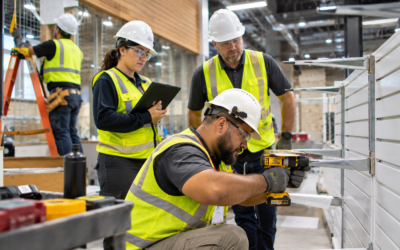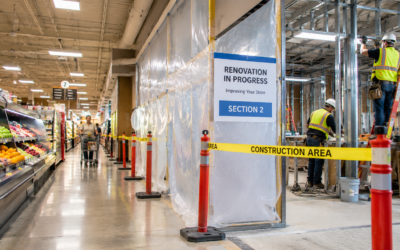

Retail construction programs involve more than completing individual renovation or build-out projects. They require the coordination of people, materials, schedules, site conditions, subcontractors, and operational requirements across multiple locations.
Whether a retailer is renovating existing stores, refreshing interior spaces, deploying new fixtures, or executing a nationwide construction rollout, each location introduces potential risks that can affect project performance.
Some risks are predictable, such as material lead times, labor availability, and inspection requirements. Others emerge during construction, including concealed site conditions, conflicting trade activities, unexpected utility issues, and changes to operational requirements.
When these risks are not identified and managed early, they can lead to schedule delays, cost increases, rework, safety concerns, and inconsistent project outcomes.
For general contractors managing retail construction programs, risk mitigation must be an ongoing process rather than a final project review. It begins during planning, continues through mobilization and field execution, and extends into inspections and closeout.
A structured approach helps project teams identify potential problems, establish preventive measures, assign responsibilities, and respond effectively when conditions change.
What Is Risk Mitigation in Retail Construction?
Risk mitigation is the process of identifying potential threats to a construction project and implementing measures to reduce their likelihood or impact.
In retail construction, these risks can involve several areas:
-
Project scope and design
-
Construction schedules
-
Labor and subcontractor availability
-
Material procurement
-
Existing building conditions
-
Trade coordination
-
Safety and site access
-
Permits and regulatory requirements
-
Quality control
-
Store operations
-
Budget and change management
-
Project closeout
Risk mitigation does not mean eliminating every possible problem. Construction projects involve variables that cannot always be predicted or controlled.
The objective is to recognize potential issues early, prepare appropriate responses, and prevent manageable problems from becoming major disruptions.
For multi-location programs, this process becomes especially important because a problem affecting one location may also reveal a recurring issue that could affect other sites.
Why Risk Mitigation Matters in Multi-Location Retail Construction
Managing one construction project is different from coordinating a program involving dozens or hundreds of locations.
Each store may have different layouts, building conditions, local requirements, access restrictions, and operational priorities.
At the same time, the retailer may expect consistent construction standards, predictable schedules, and coordinated reporting across the entire program.
Without a structured risk management approach, small issues can become repeated problems across multiple locations.
Effective risk mitigation helps general contractors:
-
Identify potential delays before they affect critical milestones.
-
Reduce avoidable rework and corrective construction.
-
Improve subcontractor and trade coordination.
-
Protect completed work and installed materials.
-
Maintain safer construction environments.
-
Manage site-specific conditions.
-
Improve cost and schedule visibility.
-
Support consistent execution across locations.
-
Maintain better communication with clients and store personnel.
For a broader look at managing large programs, see Managing Large-Scale Retail Programs Nationwide.
1. Identify Project Risks During Preconstruction
The most effective risk mitigation strategies begin before construction mobilization.
During preconstruction, the general contractor should review the project scope, available drawings, site conditions, schedules, procurement requirements, and operational constraints.
The objective is to identify potential problems while there is still time to address them through planning.
A preconstruction risk review should consider:
-
Completeness of the project scope
-
Existing building conditions
-
Drawing and specification accuracy
-
Required permits and approvals
-
Material and equipment lead times
-
Labor and subcontractor availability
-
Site access and work-hour restrictions
-
Utility requirements
-
Trade dependencies
-
Inspection and testing requirements
-
Client-specific operational expectations
For example, a retail renovation may involve existing electrical infrastructure that does not match the available drawings. Identifying this possibility before mobilization allows the project team to plan an appropriate site assessment and coordinate any necessary investigation.
The project team should document identified risks, assess their potential impact, and assign responsibility for follow-up actions.
This creates a more organized foundation for construction execution.
2. Conduct Thorough Site Assessments
Existing commercial buildings can contain conditions that are not immediately visible in construction documents.
During renovations and store improvements, contractors may encounter concealed utilities, unexpected structural conditions, outdated infrastructure, or differences between the actual space and the approved drawings.
A site assessment helps identify these conditions before they interfere with construction.
The assessment should evaluate relevant areas such as:
-
Existing electrical systems
-
Mechanical and plumbing infrastructure
-
Ceiling and wall conditions
-
Structural elements
-
Equipment locations
-
Existing fixtures and finishes
-
Available construction access
-
Material staging areas
-
Customer and employee circulation
-
Delivery and waste removal routes
The level of investigation should match the project scope and the potential consequences of unknown conditions.
Where necessary, the general contractor should coordinate additional surveys, testing, or investigations with qualified professionals.
For multi-location programs, site assessments should also follow consistent documentation procedures. This makes it easier to compare conditions and identify recurring issues across stores.
Related article: Managing Non-Standard Retail Construction Projects.
3. Establish a Risk Register and Assign Accountability
Identifying risks is only useful when the project team has a process for managing them.
A risk register provides a centralized record of potential issues, their possible impacts, assigned responsibilities, and planned responses.
A practical risk register may include:
| Risk Category | Potential Risk | Mitigation Approach |
| Scope | Incomplete or conflicting project requirements | Review drawings, specifications, and responsibilities before mobilization |
| Schedule | Delayed materials or equipment | Confirm lead times and identify critical procurement items |
| Labor | Unavailable or insufficient workforce | Verify crew availability and establish resource plans |
| Site conditions | Unexpected existing conditions | Conduct assessments and document site findings |
| Trade coordination | Conflicting installation activities | Establish sequencing and clear trade handoffs |
| Safety | Customer exposure to construction hazards | Define work zones and maintain appropriate barriers |
| Compliance | Missing permits or required approvals | Identify jurisdictional requirements early |
| Quality | Installation deficiencies | Establish inspections and documented acceptance criteria |
| Budget | Unapproved scope changes | Implement change review and authorization procedures |
| Closeout | Incomplete testing or documentation | Establish closeout requirements before construction begins |
Each risk should have an owner responsible for monitoring it and coordinating the appropriate response.
The register should be updated as project conditions change.
For larger construction programs, a centralized risk register can help management identify patterns across multiple locations rather than treating every issue as an isolated event.
4. Build Realistic Construction Schedules
An unrealistic construction schedule can introduce risks before work even begins.
When timelines do not account for actual site conditions, material availability, inspections, and trade dependencies, project teams may face unnecessary pressure during execution.
The general contractor should develop schedules based on the actual requirements of the work.
Important considerations include:
-
Scope complexity
-
Site readiness
-
Labor availability
-
Material procurement
-
Delivery schedules
-
Trade sequencing
-
Required inspections
-
Utility coordination
-
Store operating hours
-
Client approval requirements
-
Final testing and closeout
Schedules should also identify critical activities that could affect overall completion.
For example, a delayed equipment delivery may prevent fixture installation, electrical connections, or final technology deployment.
Identifying these dependencies helps project managers understand which activities require closer monitoring.
The schedule should include appropriate time for inspections, corrections, and turnover rather than assuming every activity will be completed without issues.
Related articles:
5. Manage Labor and Subcontractor Availability
Labor availability is a significant consideration in retail construction programs, particularly when several locations must be completed within a limited period.
A contractor may have a well-developed schedule but still experience delays if qualified workers or specialty subcontractors are unavailable when needed.
Risk mitigation should include confirming workforce capacity before committing to project milestones.
The project team should evaluate:
-
Required trade qualifications
-
Crew availability
-
Geographic coverage
-
Subcontractor capacity
-
Competing project commitments
-
Required licenses and certifications
-
Travel and mobilization requirements
-
Field supervision
-
Backup resource options
Responsibilities should also be clearly defined for every contractor involved in the project.
This reduces confusion about who is responsible for specific installations, inspections, corrective work, and project documentation.
For nationwide programs, resource planning should account for regional differences and the practical limitations of moving crews between locations.
Related articles:
6. Control Material Procurement and Delivery Risks
Material shortages, delayed shipments, damaged products, and incorrect deliveries can affect construction schedules and installation quality.
These risks are particularly important in retail programs that require similar materials, fixtures, or equipment across multiple locations.
The contractor should coordinate procurement with the actual construction sequence.
Risk mitigation measures may include:
-
Confirming material specifications early
-
Reviewing supplier lead times
-
Identifying long-lead items
-
Verifying quantities
-
Coordinating delivery windows
-
Inspecting materials upon arrival
-
Confirming storage requirements
-
Tracking damaged or missing items
-
Reviewing proposed substitutions
-
Maintaining visibility into procurement status
The project team should pay particular attention to items that could delay several downstream activities.
For example, missing specialty fixtures may prevent final equipment installation and require additional labor mobilization.
Material substitutions should also follow the required review and approval process. An alternative product should not be installed simply because it is available sooner.
7. Coordinate Trades to Prevent Construction Conflicts
Retail construction projects often involve multiple contractors working within the same space.
Electrical, mechanical, plumbing, drywall, flooring, fixture, and low-voltage activities may have dependencies that must be carefully coordinated.
When trade sequencing is poorly managed, contractors can interfere with one another’s work or complete installations that later need to be modified.
The general contractor should establish clear work sequences and define the conditions required before each trade begins.
This may involve:
-
Reviewing trade-specific scopes
-
Identifying installation dependencies
-
Confirming work area readiness
-
Coordinating equipment locations
-
Verifying required rough-ins
-
Establishing inspection hold points
-
Scheduling trade handoffs
-
Protecting completed installations
Regular field coordination helps identify conflicts before they result in rework or schedule delays.
For specialty installations, the project team should also confirm that all required infrastructure and supporting conditions are ready before equipment is installed.
Related articles:
8. Maintain Safety in Active Retail Environments
Construction in operating retail stores introduces additional safety considerations.
Customers and employees may remain in the facility while contractors perform demolition, installation, electrical work, material handling, and other construction activities.
The general contractor must coordinate work areas and access arrangements to reduce exposure to construction hazards.
Risk mitigation measures may include:
-
Clearly defined construction zones
-
Appropriate temporary barriers
-
Controlled worker access
-
Protected customer pathways
-
Proper signage
-
Material staging controls
-
Housekeeping procedures
-
Dust containment
-
Equipment and ladder controls
-
Emergency access protection
-
Coordination with store management
The project team should also review how construction activities may affect emergency exits, fire protection systems, and other life-safety requirements.
Work involving temporary impairments to building systems must follow applicable procedures and receive required coordination and authorization.
Safety controls should be inspected regularly, especially when construction moves between different work areas.
Related articles:
9. Manage Permits, Inspections, and Local Compliance Requirements
Retail construction programs may involve projects across multiple jurisdictions, each with its own permitting procedures, inspection requirements, and applicable regulations.
Assuming that requirements are identical across locations can create avoidable compliance risks.
The project team should identify applicable requirements based on the actual scope and jurisdiction.
These may include:
-
Building permits
-
Electrical permits
-
Plumbing permits
-
Mechanical permits
-
Fire and life-safety approvals
-
Required inspections
-
Contractor licensing requirements
-
Local amendments to applicable codes
-
Special access or work-hour restrictions
The general contractor should determine which approvals are required, who is responsible for obtaining them, and how they affect the construction schedule.
Required inspections should be included in the project plan.
Work should not proceed beyond applicable inspection hold points without the necessary authorization.
For programs covering multiple states, centralized oversight can help maintain visibility into requirements while allowing local teams to address jurisdiction-specific conditions.
Related article: Coordinating Permits and Compliance Across All 50 States.
10. Protect Quality During Accelerated Construction
Schedule pressure can increase the likelihood of installation errors, incomplete inspections, and overlooked deficiencies.
However, reducing construction risk requires maintaining quality standards even when deadlines are demanding.
The general contractor should establish inspection procedures throughout the project rather than relying only on final walkthroughs.
Quality controls may include:
-
Pre-installation verification
-
Material inspections
-
Rough-in reviews
-
Workmanship inspections
-
Required code inspections
-
Functional testing
-
Photographic documentation
-
Punch-list tracking
-
Final acceptance verification
Critical installations should be checked before subsequent work makes them difficult to access.
For example, concealed electrical or low-voltage work should be reviewed and inspected at the appropriate stage before walls or ceilings are closed.
The project team should also protect completed work from damage caused by subsequent construction activities.
Related articles:
11. Establish Clear Communication and Escalation Procedures
Unresolved communication gaps can allow manageable construction issues to become larger project risks.
Field personnel need a clear process for reporting problems, receiving direction, and communicating changes to the appropriate stakeholders.
A project communication plan should identify:
-
Primary project contacts
-
Client representatives
-
Store management contacts
-
Subcontractor supervisors
-
Approval responsibilities
-
Reporting requirements
-
Escalation procedures
-
Meeting schedules
-
Documentation standards
The project team should establish how urgent issues will be communicated and who has authority to approve changes.
For example, if an unexpected site condition affects the installation sequence, the field supervisor should know who to contact, what information to document, and whether work must pause pending direction.
Consistent reporting also helps management identify recurring issues across locations.
For multi-location programs, centralized reporting provides a clearer view of project status and potential risks.
Related articles:
12. Control Scope Changes and Cost Exposure
Changes to project scope can affect budgets, schedules, material requirements, and contractor responsibilities.
Some changes are unavoidable, especially when existing building conditions differ from the available project information.
However, undocumented or unapproved changes can create financial and contractual problems.
The general contractor should establish a consistent change management process.
A typical process includes:
1. Identify the proposed change.
2. Document the reason for the change.
3. Evaluate its impact on cost and schedule.
4. Determine whether additional approvals are required.
5. Obtain authorization from the appropriate party.
6. Communicate the approved change to affected contractors.
7. Update project documentation and schedules.
8. Verify completion of the revised scope.
Field personnel should understand that identifying a potential change does not automatically authorize additional work.
Clear procedures help maintain budget visibility and prevent disagreements during project closeout.
13. Prepare Contingency Plans for Unexpected Conditions
Even well-planned projects can encounter unexpected problems.
A material shipment may be delayed, a site may not be ready, an inspection may identify deficiencies, or existing building conditions may require additional work.
The project team should identify practical response options before these issues occur.
Contingency planning may include:
-
Alternative sequencing for independent work areas
-
Backup qualified subcontractor resources
-
Material procurement alternatives subject to approval
-
Additional site assessment procedures
-
Schedule allowances for critical activities
-
Escalation contacts
-
Documented change management procedures
-
Corrective work resources
For example, if one store is not ready for a scheduled installation, the project manager may be able to redirect available resources to another location that has completed its readiness requirements.
This should be based on actual crew availability, geographic considerations, and the revised project schedule.
Contingency plans should be realistic and reviewed as project conditions change.
14. Maintain Centralized Oversight Across All Locations
For large retail construction programs, individual project teams need a consistent way to report progress, identify problems, and escalate issues.
Centralized oversight helps management maintain visibility across locations and recognize risks that may not be apparent when each project is reviewed separately.
A centralized management process can include:
-
Standardized project reporting
-
Consolidated schedule tracking
-
Risk registers
-
Budget and change logs
-
Subcontractor performance monitoring
-
Quality inspection records
-
Permit and inspection status
-
Material procurement tracking
-
Issue escalation procedures
-
Closeout documentation
This approach helps management identify recurring problems and coordinate corrective actions across the program.
For example, repeated delays involving a particular fixture package may indicate a procurement issue that could affect several upcoming locations.
Identifying the pattern early gives the project team an opportunity to review the issue before additional stores are affected.
Centralized oversight should still allow local project teams to address site-specific conditions and make approved adjustments.
Common Risk Mitigation Mistakes in Retail Construction
Even experienced contractors can overlook important risks when project teams focus primarily on immediate construction activities.
Starting Work Before Site Readiness Is Confirmed
Crews may arrive before the space, materials, or required approvals are ready.
Better approach: Establish a documented site readiness checklist before mobilization.
Treating Every Location the Same
Different stores may have different layouts, building systems, access conditions, and jurisdictional requirements.
Better approach: Use standardized procedures while conducting location-specific assessments.
Failing to Assign Risk Ownership
Potential problems may be identified without a clear person responsible for monitoring or resolving them.
Better approach: Assign a risk owner and define the required follow-up action.
Relying on Verbal Communication Alone
Important scope changes or field decisions may not be documented.
Better approach: Maintain written records of issues, approvals, and corrective actions.
Overlooking Material Lead Times
Late procurement decisions can delay installation and affect downstream activities.
Better approach: Identify long-lead materials early and track procurement milestones.
Skipping Quality Checkpoints
Installation problems may remain undetected until final inspection.
Better approach: Establish quality verification throughout construction.
Underestimating Local Compliance Requirements
Permit and inspection requirements may vary by jurisdiction.
Better approach: Verify applicable requirements for every project location.
Failing to Review Recurring Program Issues
Problems may be treated as isolated incidents even when the same issue is affecting multiple stores.
Better approach: Use centralized reporting to identify trends and implement program-wide corrective measures.
How to Measure Risk Mitigation Performance
Risk mitigation should be evaluated using measurable project information.
A contractor should review whether its procedures are reducing preventable disruptions and improving project execution.
Useful performance indicators include:
| Performance Indicator | What It Measures |
| Schedule variance | Difference between planned and actual project milestones |
| Cost variance | Difference between approved budgets and actual project costs |
| Change-order frequency | Number of approved scope changes |
| Rework frequency | Amount of corrective work required |
| First-pass inspection rate | Percentage of inspections passed without corrections |
| Site readiness rate | Percentage of locations ready at scheduled mobilization |
| Material delivery performance | Percentage of deliveries received according to schedule |
| Safety observations | Identification and resolution of construction hazards |
| Permit and inspection performance | Completion of required approvals and inspections |
| Issue resolution time | Time required to address reported project issues |
| Subcontractor performance | Reliability of trade partners against agreed project requirements |
| Closeout completeness | Completion of required testing and documentation |
These measurements should be reviewed across individual projects and the overall construction program.
For example, repeated schedule delays may indicate a need to improve procurement planning or site readiness verification.
An increase in rework may point to deficiencies in trade coordination, installation procedures, or field supervision.
The objective is to use project information to identify patterns and improve future execution.
What to Look for in a General Contractor With Strong Risk Management Capabilities
Retailers planning multi-location construction programs should evaluate how a general contractor identifies and manages project risks.
Important capabilities include:
Preconstruction planning: Does the contractor identify scope gaps, site conditions, and project dependencies before mobilization?
Site assessment: Can the team evaluate existing building conditions and document location-specific requirements?
Schedule management: Does the contractor develop realistic schedules and monitor critical activities?
Workforce coordination: Can the contractor confirm labor availability and coordinate qualified trade partners?
Procurement management: Does the team monitor material requirements, lead times, and delivery schedules?
Trade coordination: Can the contractor manage installation sequencing and prevent conflicts between subcontractors?
Safety management: Are appropriate controls established for construction in active retail environments?
Regulatory coordination: Can the contractor identify permit, licensing, and inspection requirements for each location?
Quality assurance: Are inspections, testing, and corrective actions documented?
Centralized oversight: Can management maintain visibility into risks and performance across multiple locations?
Change management: Does the contractor have a defined process for evaluating and approving scope changes?
Closeout management: Are final inspections, documentation, and outstanding deficiencies tracked through completion?
A capable general contractor should be able to explain not only how it responds to problems but also how it identifies and reduces risks before they affect the project.
How Prime Retail Services Supports Risk-Controlled Commercial Construction
Prime Retail Services is a nationwide commercial general contractor supporting construction, renovation, and multi-location programs across retail and other commercial environments.
Managing construction risks across multiple locations requires coordination between project management, field personnel, subcontractors, suppliers, and client representatives.
Our approach emphasizes structured project management, coordinated execution, and repeatable procedures that support project visibility and consistent delivery.
Our capabilities include:
-
Remodels and Renovations: Coordinated construction activities within existing commercial facilities.
-
Build-Outs and Store Refreshes: Execution of commercial improvements and interior modifications.
-
Special Project Rollouts: Coordinated execution for time-sensitive construction requirements.
-
Multi-Site FF&E Programs: Management of fixture, furniture, and equipment installations across multiple locations.
-
Electrical Coordination: Additional project capabilities through Prime Power Solutions.
-
Technology Deployment: Technology installation and infrastructure support through Prime-Net.
Through our proprietary 3P Process, Perfect, Project, Process, we emphasize execution quality, project coordination, and repeatable procedures that support consistent project delivery.
With general contracting licenses in 49 states, excluding Hawaii, Prime Retail Services supports commercial construction requirements across a broad geographic footprint.
Our focus is to help clients coordinate resources, manage site-specific requirements, maintain project visibility, and support controlled execution across commercial construction programs.
Frequently Asked Questions
What is risk mitigation in retail construction?
Risk mitigation is the process of identifying potential construction problems and implementing measures to reduce their likelihood or impact. It covers areas such as scheduling, cost, safety, quality, procurement, compliance, and site conditions.
What are the most common risks in retail construction programs?
Common risks include incomplete project scopes, unexpected site conditions, material delays, labor shortages, trade coordination problems, safety concerns, permit delays, quality deficiencies, and unapproved scope changes.
Why is risk management important for multi-location retail construction?
A problem at one location can reveal an issue that may affect other stores. Consistent risk management helps project teams identify recurring problems, coordinate corrective actions, and maintain better program-wide visibility.
When should risk mitigation begin?
It should begin during preconstruction, before crews mobilize. Risk management should continue throughout construction, inspections, and project closeout.
How can general contractors reduce construction schedule risks?
They can develop realistic schedules, verify site readiness, confirm workforce availability, track material lead times, coordinate trade dependencies, and monitor critical milestones.
How can contractors manage risks across different states?
They should verify applicable licensing, permitting, inspection, and code requirements for each jurisdiction. Centralized tracking can help maintain program-wide visibility while allowing local teams to address specific requirements.
How does trade coordination reduce construction risk?
Proper trade coordination helps prevent installation conflicts, incomplete work, damaged installations, and unnecessary remobilization.
How can retailers reduce the risk of construction delays?
Retailers can provide accurate project information, establish clear approval responsibilities, coordinate store access, communicate operational requirements, and work with a contractor that maintains consistent project oversight.
What is a construction risk register?
A risk register is a document used to record potential project risks, assess their possible impact, assign responsibility, and track mitigation actions.
How should contractors measure risk management performance?
Useful measures include schedule and cost variance, rework frequency, inspection performance, site readiness, material delivery performance, safety observations, and issue resolution time.
Final Thoughts
Retail construction programs involve a wide range of variables that can affect cost, schedule, quality, safety, and operational continuity.
Managing these risks requires more than responding when problems occur. It requires identifying potential issues early, assigning clear responsibilities, coordinating resources, and maintaining visibility throughout the construction process.
For multi-location programs, consistent procedures and centralized oversight help project teams recognize recurring issues and address them before they affect additional locations.
At the same time, every store must be evaluated based on its actual building conditions, operational requirements, and local compliance obligations.
The most effective risk mitigation strategy combines standardized project controls with the flexibility to respond to site-specific challenges.
Ultimately, successful retail construction programs depend on a general contractor’s ability to anticipate challenges, maintain accountability, and manage execution from initial planning through final closeout.
Planning a retail construction or multi-location rollout program?
Contact Prime Retail Services at info@primeretailservices.com to discuss your next commercial construction project.