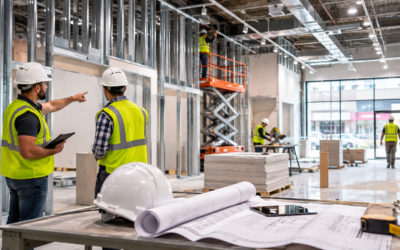
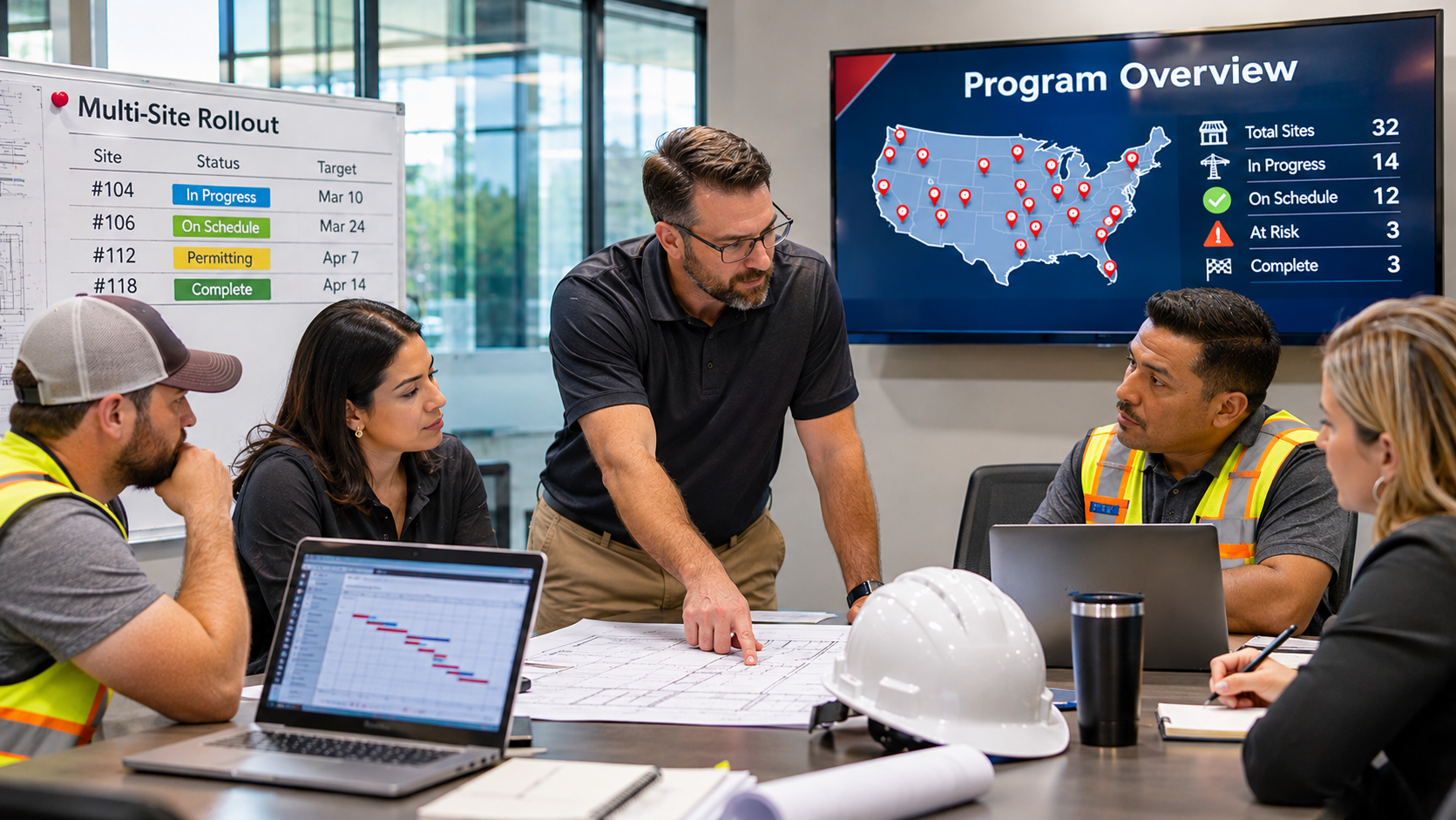
Managing construction across multiple commercial locations presents challenges that go beyond completing individual projects. Every site has its own conditions, schedules, access requirements, trade partners, and operational considerations. At the same time, clients expect consistent quality, predictable execution, and results that align with established brand standards.
Without a coordinated management structure, differences in communication, scheduling, procurement, and field execution can create inconsistencies from one location to another.
This is where centralized oversight becomes essential.
Centralized oversight provides a unified approach to planning, coordinating, monitoring, and managing construction activities across multiple locations. Rather than allowing each site to operate independently, a centralized team establishes common expectations, maintains visibility, and coordinates execution throughout the program.
For retailers and commercial organizations managing recurring renovations, store refreshes, build-outs, and special projects, this approach helps improve consistency while maintaining control over schedules, resources, quality, and project outcomes.
What Is Centralized Oversight in Commercial Construction?
Centralized oversight is a project management approach in which a central team maintains coordination and visibility across multiple construction projects or locations.
Instead of managing each location as an isolated assignment, the organization establishes a unified management structure that supports consistent planning, communication, reporting, and execution.
The centralized team typically oversees:
- Program planning and project scheduling
- Scope definition and standardization
- Budget tracking and cost coordination
- Contractor and trade partner coordination
- Procurement and material readiness
- Site readiness and mobilization
- Quality assurance and field inspections
- Schedule monitoring and issue resolution
- Progress reporting and documentation
- Project closeout and final acceptance
Individual project teams remain responsible for their assigned field activities, but they operate within a common framework.
This creates a more consistent experience for clients while allowing project managers to identify issues, coordinate resources, and make informed decisions across the entire program.
For a broader look at this management approach, see Nationwide Construction Program Management.
Why Consistency Is Difficult to Maintain Across Multiple Locations
A construction program involving several locations can quickly become difficult to manage when each project follows a different process.
Even when locations share similar designs and scopes, field conditions and execution requirements may vary.
Common challenges include:
Different Site Conditions
Existing buildings may have different layouts, infrastructure, access limitations, and construction requirements. These differences can affect installation methods, schedules, and project costs.
Inconsistent Communication
When project updates are managed through separate channels, important information may not reach the right people at the right time.
Variations in Field Execution
Different contractors, supervisors, and installation teams may interpret project requirements differently, resulting in inconsistent workmanship or completion standards.
Scheduling Conflicts
Multiple projects may compete for the same labor resources, materials, equipment, or specialized trade partners.
Limited Program Visibility
Without centralized reporting, leadership may have difficulty understanding which locations are progressing as planned and which require intervention.
Inconsistent Quality Control
When inspection procedures and acceptance criteria vary by location, it becomes harder to maintain uniform results across the program.
These challenges are closely related to the issues discussed in Managing Large-Scale Retail Programs Nationwide.
Centralized oversight addresses these challenges by establishing a common operating structure for every project.
1. Establishes Standardized Processes Across All Locations
One of the most important benefits of centralized oversight is process consistency.
When every location follows a defined project management framework, teams have a clearer understanding of how work should be planned, executed, monitored, and completed.
Standardized processes may cover:
- Project initiation and scope confirmation
- Site assessments and readiness verification
- Scheduling and milestone tracking
- Procurement and material coordination
- Contractor assignments and mobilization
- Field reporting and communication
- Quality inspections and documentation
- Deficiency management
- Final closeout and acceptance
These procedures help reduce unnecessary differences in how individual projects are managed.
Standardization does not mean every location must follow identical installation methods regardless of conditions. It means the same management expectations, documentation requirements, and quality standards are applied throughout the program.
This balance is explored further in Standardization vs. Flexibility in Multi-Site Programs.
2. Creates Clear Accountability and Lines of Communication
Multi-site programs often involve several stakeholders, including clients, project managers, field supervisors, subcontractors, suppliers, and facility representatives.
Without clear accountability, responsibilities can overlap or important decisions can be delayed.
Centralized oversight establishes defined communication channels and identifies who is responsible for each part of the project.
A typical structure may include:
- A central program manager overseeing overall performance
- Project managers coordinating assigned locations
- Field supervisors monitoring on-site activities
- Trade partners completing specialized scopes
- Client representatives providing approvals and operational direction
This structure helps ensure that information moves through the appropriate channels.
It also creates a clear escalation process when unexpected conditions, schedule conflicts, or scope changes arise.
Effective communication is particularly important when managing complex projects with multiple stakeholders. Learn more in Why Project Management Matters in Retail Construction.
3. Improves Visibility Across the Entire Program
Managing projects individually can make it difficult to understand overall program performance.
A centralized team can monitor multiple locations through consistent reporting, milestone tracking, and progress documentation.
This provides leadership with a clearer picture of:
- Project status by location
- Schedule performance
- Budget and cost trends
- Material and labor readiness
- Outstanding approvals
- Open deficiencies
- Potential project risks
- Upcoming milestones
- Closeout progress
With this visibility, project managers can identify patterns that may not be obvious when reviewing individual projects.
For example, repeated material delays across several locations may indicate a procurement issue rather than isolated site problems.
Similarly, recurring installation deficiencies may reveal a need for additional training, clearer specifications, or adjustments to field procedures.
Centralized reporting allows teams to address these patterns at the program level instead of repeatedly reacting to individual problems.
4. Supports More Consistent Scheduling and Resource Allocation
A multi-site construction program requires careful coordination of labor, materials, equipment, and trade partners.
When each location is managed independently, resource conflicts can develop without sufficient visibility.
Centralized oversight allows project managers to coordinate schedules across the entire program and allocate resources according to project priorities.
This may involve:
- Sequencing work across multiple locations
- Coordinating labor availability
- Aligning subcontractor schedules
- Planning material deliveries
- Managing equipment requirements
- Adjusting schedules when site conditions change
- Prioritizing time-sensitive projects
A centralized team can also identify opportunities to group activities geographically or coordinate similar scopes across locations.
This can help reduce unnecessary mobilization, improve resource utilization, and create more predictable execution.
For projects with demanding deadlines, effective coordination becomes even more important. See Planning for Compressed Construction Schedules and Rapid Mobilization for Time-Sensitive Special Projects.
5. Strengthens Quality Control and Brand Consistency
For retailers, construction quality is not limited to structural performance or code compliance. The finished environment must also reflect the client’s design standards, brand expectations, and operational requirements.
Inconsistent fixture placement, finishes, lighting, millwork, and installation details can create noticeable differences between locations.
Centralized oversight helps establish common quality expectations and verification procedures.
A coordinated quality control program may include:
- Standardized inspection checklists
- Approved construction drawings and specifications
- Consistent installation requirements
- Photographic progress documentation
- Defined acceptance criteria
- Deficiency tracking and resolution
- Final walkthrough procedures
These standards help project teams evaluate completed work using the same criteria.
For example, a retailer implementing a store refresh across multiple locations may require consistent fixture layouts, finish selections, signage placement, and customer-facing details.
Centralized oversight helps ensure these requirements are communicated and verified throughout the rollout.
Explore related strategies in How to Maintain Brand Consistency During Retail Refresh Programs.
For projects involving fixtures, displays, and custom components, standardized installation expectations are equally important. See Fixture and Millwork Installation Best Practices.
6. Improves Cost Control and Procurement Coordination
Cost control becomes more complicated when construction activities are spread across multiple locations.
Different purchasing decisions, inconsistent material specifications, and uncoordinated deliveries can create unnecessary cost variations.
Centralized oversight helps establish consistent procurement and cost management practices.
This may include:
- Standardized material specifications
- Coordinated purchasing schedules
- Consolidated procurement opportunities
- Budget tracking by location
- Change order review
- Cost comparison across projects
- Material availability monitoring
- Vendor and supplier coordination
A centralized team can also identify recurring cost increases and investigate whether they result from scope changes, site conditions, procurement issues, or inconsistent execution.
For example, if several locations experience similar material shortages, the program team can address the issue through procurement planning rather than treating every delay as a separate event.
The goal is not simply to reduce spending. It is to improve cost visibility, support informed decisions, and maintain control over the program’s financial performance.
7. Helps Identify Risks Before They Affect Project Delivery
Every construction project carries risks, but multi-site programs introduce additional complexity because an issue at one location may affect other scheduled activities.
Centralized oversight provides a broader view of potential risks and helps project managers identify patterns early.
Common risks include:
- Delayed permits and approvals
- Incomplete site information
- Unavailable materials
- Labor shortages
- Trade partner scheduling conflicts
- Unexpected existing conditions
- Equipment delivery delays
- Access restrictions
- Unresolved design questions
- Operational constraints at active facilities
A centralized risk management process can establish procedures for documenting, evaluating, assigning, and resolving issues.
It also helps project managers determine whether an issue is isolated or could affect the wider program.
For non-standard conditions, the team may need to evaluate site-specific requirements while maintaining the overall project framework. Our article on Managing Non-Standard Retail Construction Projects explores this challenge in greater detail.
8. Supports Consistent Execution in Active Commercial Environments
Many retail construction projects take place while stores remain open or while employees continue operating within the facility.
This requires additional coordination involving customer access, deliveries, work areas, safety measures, and approved construction schedules.
Centralized oversight helps establish consistent procedures for managing these operational requirements across locations.
Depending on the project, this may involve:
- Coordinating work around store operating hours
- Establishing temporary barriers and designated work zones
- Scheduling disruptive activities during approved off-hours
- Maintaining customer and employee access
- Coordinating deliveries and material staging
- Communicating schedule changes
- Verifying cleanup and site readiness before reopening affected areas
These procedures help reduce operational disruption while maintaining project progress.
Related guidance is available in:
- Retail Construction in Open Stores
- Best Practices for After-Hours Retail Construction
- How to Execute Retail Renovations Without Disrupting Operations
- Minimizing Customer Impact During Active Store Projects
9. Creates More Consistent Documentation and Project Closeout
Project documentation is essential to maintaining visibility and accountability across a construction program.
When documentation requirements vary by location, comparing project performance and verifying completion becomes more difficult.
Centralized oversight establishes consistent reporting and closeout expectations.
Documentation may include:
- Approved scopes of work
- Project schedules and milestone updates
- Site assessment reports
- Daily field reports
- Progress photographs
- Inspection records
- Change order documentation
- Deficiency logs
- Testing and commissioning records
- Final acceptance documentation
Standardized closeout procedures also help ensure that completed locations are properly documented before the program moves forward.
This information provides a useful reference for future maintenance, renovations, and additional construction phases.
10. Enables Better Performance Measurement Across Locations
A centralized management structure makes it easier to evaluate performance using consistent metrics.
Instead of relying on isolated project updates, leadership can compare results across locations and identify opportunities for improvement.
Useful performance indicators include:
| Performance Indicator | What It Measures |
| Schedule adherence | Projects completed according to planned milestones |
| Budget performance | Actual costs compared with approved budgets |
| First-pass quality | Work accepted without additional corrective work |
| Rework frequency | Recurring installation or construction corrections |
| Material readiness | Availability of required materials before scheduled work |
| Issue resolution time | Time required to address project obstacles |
| Safety performance | Compliance with established safety requirements |
| Closeout completion | Timely submission of required project documentation |
| Program consistency | Alignment with standardized execution and quality requirements |
These indicators help identify whether improvements are needed in planning, procurement, scheduling, field execution, or project management.
Over time, performance data can also support better forecasting and more effective program planning.
11. Provides a Stronger Foundation for Nationwide Construction Programs
Centralized oversight becomes especially valuable when projects are distributed across multiple states and geographic regions.
A nationwide program may involve different local requirements, building conditions, permitting processes, subcontractor availability, and operating environments.
Without a coordinated management structure, maintaining consistency across these locations can become difficult.
A nationwide general contractor can help establish common project management procedures while coordinating execution with local requirements and site conditions.
This includes:
- Centralized project management
- Consistent communication and reporting
- Coordinated subcontractor management
- Standardized quality expectations
- Multi-location scheduling
- Procurement coordination
- Site-specific planning
- Program-wide performance monitoring
For organizations managing recurring construction requirements, working with one coordinated contractor can simplify communication and improve accountability.
Learn more about the advantages in Benefits of Working With One Nationwide General Contractor and Nationwide General Contractor Guide.
Centralized Oversight Does Not Mean Every Location Is Managed the Same Way
Consistency requires standardization, but successful construction programs must also account for differences between facilities.
A location may have unique electrical infrastructure, structural conditions, access limitations, permitting requirements, or operational constraints.
Applying identical field solutions to every location may not be practical or appropriate.
The goal of centralized oversight is to standardize how projects are managed while allowing approved adjustments when site conditions require them.
A practical approach includes:
Common program standards: Establish consistent expectations for quality, reporting, communication, scheduling, and closeout.
Site-specific assessments: Verify actual conditions before finalizing installation and construction requirements.
Controlled exceptions: Document and review deviations from approved plans or specifications.
Clear approval procedures: Establish who can authorize changes and how decisions are communicated.
Consistent verification: Confirm that approved adjustments still meet project requirements and client expectations.
This approach provides structure without sacrificing the flexibility needed to address real-world construction conditions.
Common Mistakes That Undermine Centralized Oversight
Centralized oversight can improve program consistency, but only when supported by effective management practices.
Some common mistakes include:
Treating Every Location as an Independent Project
Managing each site without considering its relationship to the broader program can create scheduling conflicts, inconsistent procedures, and limited visibility.
Establishing Standards Without Verifying Site Conditions
Standardized specifications should not replace field assessments. Existing conditions must be verified before work proceeds.
Creating Too Many Communication Channels
Uncoordinated communication can result in conflicting instructions, duplicated updates, and delayed decisions.
Failing to Define Accountability
A centralized structure must clearly identify who manages decisions, field execution, approvals, and issue resolution.
Inconsistent Reporting Requirements
If locations report progress differently, program leadership may struggle to compare performance and identify emerging problems.
Delaying Issue Escalation
Small problems can become larger program risks when they are not communicated and addressed promptly.
Focusing Only on Schedule and Cost
Successful program oversight must also account for safety, quality, operational requirements, documentation, and long-term performance.
How Prime Retail Services Applies Centralized Oversight
Prime Retail Services is a nationwide commercial general contractor supporting construction, renovation, and multi-location programs across retail and other commercial environments.
Our approach emphasizes centralized project management, coordinated field execution, and repeatable processes designed to support consistency across locations.
Through our proprietary 3P Process, Perfect, Project, Process, we focus on three important areas:
PERFECT
We pursue execution without compromise. Project requirements, construction details, and quality expectations are managed with attention to client standards and brand expectations.
PROJECT
We coordinate schedules, subcontractors, resources, communication, and project requirements to maintain alignment across every phase of execution.
PROCESS
We apply structured and repeatable procedures that support consistent planning, field execution, quality control, and closeout.
These principles support our capabilities in:
- Commercial remodels and renovations
- Build-outs and store refreshes
- Special project rollouts
- Multi-site FF&E programs
- Electrical coordination through Prime Power Solutions
- Technology deployment through Prime-Net
For clients managing large construction programs, centralized oversight helps connect individual project activities to broader program objectives.
With general contracting licenses in 49 states, excluding Hawaii, Prime Retail Services supports commercial construction requirements across a broad geographic footprint.
Our focus is to help clients maintain visibility, coordination, and consistent execution throughout their construction programs.
Frequently Asked Questions
What is centralized oversight in construction?
Centralized oversight is a management approach in which a central team coordinates planning, scheduling, communication, resources, quality control, reporting, and closeout across multiple construction projects or locations.
How does centralized oversight improve construction consistency?
It establishes common processes, quality expectations, communication procedures, and reporting standards. This helps reduce variations in how individual locations are managed and completed.
Is centralized project management necessary for multi-site construction?
It becomes increasingly valuable as the number of locations, stakeholders, contractors, and overlapping schedules grows. A centralized structure helps maintain program-wide visibility and coordination.
Does centralized oversight eliminate the need for local project teams?
No. Local project teams remain important for managing site conditions and field activities. Centralized oversight provides the coordination, standards, and accountability structure that connects those teams.
How does centralized oversight help control construction costs?
It improves budget visibility, procurement coordination, resource allocation, and change management. It also helps identify recurring cost issues across multiple locations.
How does centralized oversight support brand consistency?
It establishes common specifications, installation requirements, inspection procedures, and acceptance criteria. These standards help maintain consistent results across different facilities.
Can centralized oversight accommodate different site conditions?
Yes. Effective oversight establishes common program standards while allowing documented and approved adjustments for legitimate site-specific requirements.
What should be monitored in a multi-site construction program?
Important indicators include schedule adherence, budget performance, quality results, material readiness, safety performance, issue resolution, and closeout completion.
What is the difference between centralized oversight and centralized project management?
Centralized project management generally refers to the coordination and management of project activities through a central team. Centralized oversight is broader and includes program-level visibility, performance monitoring, quality expectations, accountability, and governance across multiple projects.
Final Thoughts
Consistency across multiple construction locations does not happen by chance. It requires a management structure that connects planning, communication, scheduling, quality control, and field execution.
Centralized oversight provides that structure.
By establishing common processes, maintaining program-wide visibility, coordinating resources, and defining accountability, commercial construction teams can reduce unnecessary variations and improve execution across locations.
For retailers and commercial organizations managing recurring renovations, refreshes, and nationwide construction programs, this approach creates a stronger foundation for predictable performance and consistent results.
The objective is not to make every location identical. It is to ensure that every project is managed with the same level of coordination, accountability, and attention to quality.
Managing construction across multiple locations?
Contact Prime Retail Services at info@primeretailservices.com to discuss how our team can support your next commercial construction program.