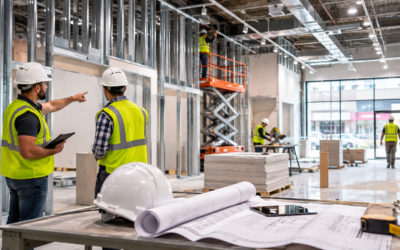
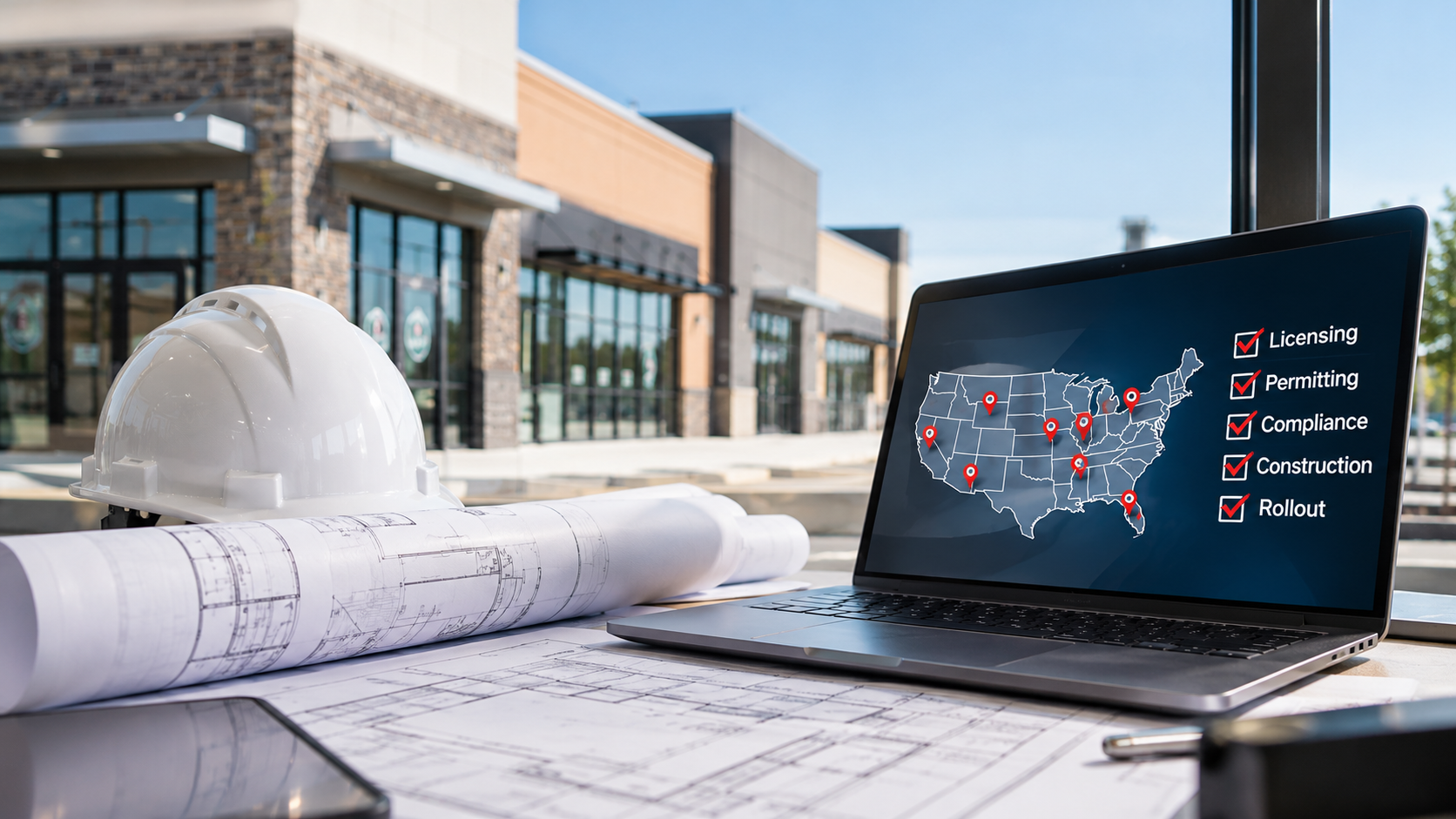
Expanding a retail business across multiple states involves more than identifying new markets and opening additional locations. Every new facility introduces construction requirements, permitting processes, local regulations, contractor qualifications, and coordination challenges that can affect project timelines and budgets.
For retailers planning regional or nationwide expansion, working with contractors who are properly licensed across their target markets can simplify an important part of the process.
Nationwide contractor licensing helps reduce the complexity of coordinating construction services across state lines. Instead of repeatedly searching for and qualifying different general contractors in each market, retailers can work with an established construction partner that maintains the licensing coverage and operational capabilities needed to support projects across multiple jurisdictions.
However, licensing is only one part of successful expansion. Contractors must also understand local building requirements, coordinate permitting, manage qualified trade partners, and maintain consistent project oversight.
When these capabilities work together, retailers can establish a more organized approach to multi-state construction and expansion.
What Is Nationwide Contractor Licensing?
Nationwide contractor licensing refers to maintaining the appropriate contractor licenses, registrations, or other authorizations required to perform construction work across multiple states.
In the United States, contractor licensing requirements are not governed by one universal national license. Requirements vary by state and may also differ by municipality, project type, construction classification, and scope of work.
Depending on the jurisdiction, contractors may need to obtain:
- State-issued general contractor licenses
- Specialty contractor licenses
- Electrical or mechanical licenses
- Local business registrations
- Municipal contractor registrations
- Required insurance and bonding
- Qualifying individual or responsible managing employee credentials
A contractor working across multiple states must understand which requirements apply to each project and maintain the appropriate credentials.
For retailers, this matters because construction activities may involve different scopes, including store renovations, build-outs, electrical upgrades, fixture installations, and multi-location rollouts.
A contractor with established licensing coverage across multiple markets can provide a more streamlined starting point for managing these projects.
Why Licensing Matters for Retail Expansion
Retail expansion often involves overlapping construction schedules across several states.
A company may be renovating existing stores in one region while opening new locations in another. It may also be coordinating equipment upgrades, technology installations, or brand refresh programs across an established portfolio.
Each project must comply with the applicable licensing and regulatory requirements of its location.
Working with contractors that lack the required credentials can create avoidable complications, including:
- Delayed project starts
- Additional contractor qualification requirements
- Disruptions to permitting
- Administrative coordination challenges
- Potential compliance issues
- Difficulty maintaining consistent project oversight
Proper licensing helps establish that a contractor meets the applicable qualifications to perform the work within a particular jurisdiction.
For retailers, selecting a contractor with broader licensing coverage can simplify vendor coordination and support a more consistent approach to expansion.
1. Reduces the Need to Qualify Multiple General Contractors
One of the biggest challenges of multi-state retail expansion is finding qualified construction partners in every target market.
When retailers work with separate general contractors in each state, they may need to repeat the vendor qualification process for every new market.
This can involve reviewing:
- Contractor licenses and registrations
- Insurance certificates
- Bonding requirements
- Relevant project experience
- Safety programs
- Financial qualifications
- References and past performance
- Subcontractor management capabilities
The process can become increasingly demanding as the number of locations grows.
Working with one nationwide general contractor that maintains the necessary licensing coverage can reduce the need to establish entirely new primary contractor relationships in every market.
This does not eliminate the need to verify project-specific qualifications or local trade partner requirements. However, it can create a more consistent starting point for vendor management.
For a closer look at this approach, read Benefits of Working With One Nationwide General Contractor.
2. Simplifies Coordination Across State Lines
Multi-state construction programs involve more than managing individual job sites. They require coordination between clients, project managers, local authorities, subcontractors, suppliers, and facility representatives.
When every location has a different primary contractor, communication and project management procedures can vary considerably.
A contractor with established nationwide capabilities can help centralize important coordination activities.
These may include:
- Project initiation and scope review
- Scheduling and milestone tracking
- Site assessments
- Permit coordination
- Trade partner management
- Procurement planning
- Progress reporting
- Quality control
- Project closeout
A centralized management structure gives retailers a more consistent point of contact and a clearer view of construction activities across their portfolio.
This becomes particularly valuable when several locations are progressing simultaneously.
Learn more about this approach in Nationwide Construction Program Management.
3. Helps Establish Consistent Construction Standards
Retailers depend on consistency to protect their brand identity and customer experience.
Whether a company is opening five locations or renovating fifty, each completed facility should reflect the approved design, specifications, materials, and construction standards.
Using different general contractors across multiple markets can introduce variations in:
- Construction methods
- Material selections
- Installation quality
- Scheduling procedures
- Communication practices
- Inspection processes
- Closeout documentation
A nationwide construction partner can help establish standardized project management procedures and quality expectations across locations.
This creates a common framework for execution while allowing approved adjustments for local building conditions and regulatory requirements.
The balance between standardized requirements and site-specific flexibility is explored in Standardization vs. Flexibility in Multi-Site Programs.
For retailers implementing recurring store refreshes, these standards also help protect visual consistency across their locations. See How to Maintain Brand Consistency During Retail Refresh Programs.
4. Supports More Predictable Project Scheduling
Licensing and contractor qualification are important considerations during preconstruction.
If a selected contractor does not have the required authorization to perform work in a particular state, additional administrative steps may be necessary before the project can proceed.
Identifying licensing requirements early helps reduce the risk of these issues affecting the construction schedule.
A contractor with established licensing coverage across multiple states may already have processes for evaluating jurisdictional requirements and coordinating the appropriate project resources.
This supports better planning for:
- Project start dates
- Permit submissions
- Subcontractor assignments
- Material procurement
- Labor availability
- Construction milestones
- Inspections and approvals
Licensing alone does not guarantee faster permitting or construction. Local authorities, project complexity, design readiness, and site conditions still influence the schedule.
However, addressing contractor qualifications early helps remove one potential source of avoidable delays.
For projects with compressed timelines, see Planning for Compressed Construction Schedules.
5. Makes Multi-Site Rollouts Easier to Manage
Retail expansion frequently involves repeating similar construction activities across multiple locations.
These programs may include:
- New store build-outs
- Store remodels and renovations
- Fixture and millwork installations
- Technology upgrades
- Equipment replacements
- Brand refresh programs
- Special project rollouts
Managing these activities across different states requires a coordinated approach to planning, scheduling, labor, materials, and quality control.
A nationwide contractor can help connect individual projects to a broader rollout strategy.
For example, a retailer opening multiple locations may use a centralized project management team to coordinate site assessments, construction schedules, contractor assignments, and progress reporting.
This helps leadership maintain visibility across the program rather than managing each location as a completely separate initiative.
Explore the fundamentals in What Makes a Successful Multi-Site Rollout and Managing Large-Scale Retail Programs Nationwide.
6. Improves Accountability and Vendor Management
When retailers rely on multiple contractors across different states, accountability can become fragmented.
Different contractors may have different reporting formats, communication procedures, quality standards, and escalation processes.
A nationwide contractor with centralized oversight can provide a more consistent management structure.
This may include:
- Defined project responsibilities
- Standardized reporting requirements
- Centralized communication
- Consistent progress updates
- Documented issue resolution
- Coordinated quality inspections
- Standardized closeout procedures
A more unified approach helps retailers understand who is responsible for project decisions, field coordination, and performance monitoring.
It also makes it easier to identify recurring issues across locations and address them at the program level.
Read more about this management strategy in How Centralized Oversight Improves Consistency.
7. Helps Coordinate Local Permitting and Regulatory Requirements
Nationwide licensing should not be confused with a universal authorization to perform every type of construction work in every jurisdiction.
State and local requirements may differ significantly.
Depending on the location and project scope, construction activities may require:
- Building permits
- Electrical permits
- Mechanical permits
- Plumbing permits
- Fire protection approvals
- Signage permits
- Local contractor registrations
- Inspections and occupancy approvals
Even when a general contractor holds the necessary state license, individual projects may still require local registrations, permits, specialty contractors, or additional approvals.
A contractor experienced in multi-state construction should evaluate these requirements during preconstruction.
This includes determining which work can be performed under its existing credentials and which scopes require appropriately licensed specialty contractors.
Early coordination helps reduce the likelihood of permit-related surprises after construction planning has begun.
For projects involving significant electrical work, see Retail Construction Electrical Scope.
8. Provides Better Coordination Between Construction and Specialty Services
Retail expansion projects frequently involve multiple construction disciplines.
Beyond general construction, a location may require electrical upgrades, network infrastructure, security systems, POS installation, digital signage, and specialized equipment.
These scopes must be coordinated to ensure that installation activities are completed in the correct sequence.
A nationwide general contractor with access to coordinated specialty capabilities can help simplify communication and scheduling between different project teams.
Important coordination areas may include:
Electrical systems: Power distribution, lighting, equipment connections, and electrical upgrades.
Low-voltage infrastructure: Network cabling, wireless access points, CCTV, and communications systems.
Fixtures and millwork: Installation sequencing, power and data access, equipment integration, and final placement.
Technology deployment: POS systems, digital displays, network equipment, and related infrastructure.
Coordinating these requirements early helps reduce trade conflicts, installation delays, and unnecessary rework.
Related resources include:
- Coordinating Electrical and Low-Voltage Work in Remodels
- Benefits of Self-Performing Electrical and Low-Voltage Work
- Fixture and Millwork Installation Best Practices
9. Supports Expansion Without Sacrificing Existing Store Operations
Many retailers expand while continuing to operate their existing locations.
This means construction must be coordinated around business hours, customer access, employee activities, deliveries, and other operational requirements.
A nationwide contractor can apply consistent planning and communication procedures across different facilities while accounting for the unique requirements of each location.
Depending on the project, this may involve:
- Coordinating construction around store operating hours
- Scheduling disruptive work during approved periods
- Establishing temporary work zones
- Managing material deliveries
- Maintaining safe customer access
- Coordinating temporary closures or restricted areas
- Completing work in phases
These considerations become especially important when a retailer is renovating existing stores while simultaneously preparing new locations.
For additional guidance, see:
- Retail Construction in Open Stores
- Best Practices for After-Hours Retail Construction
- How to Execute Retail Renovations Without Disrupting Operations
- Minimizing Customer Impact During Active Store Projects
10. Creates a Stronger Foundation for Long-Term Growth
Retail expansion is rarely a one-time activity.
Successful retailers may continue opening locations, updating existing facilities, implementing new technology, and refreshing their store environments as business requirements change.
A contractor relationship that supports multiple markets can provide continuity as these programs evolve.
Instead of repeatedly establishing new construction partnerships, retailers can build on an existing management structure, established communication procedures, and documented project history.
This can support:
- More consistent project planning
- Better historical cost visibility
- Familiarity with brand standards
- Improved coordination across locations
- More organized vendor management
- Repeatable construction procedures
- Better long-term program planning
The result is a construction relationship that can support expansion beyond individual store openings.
Nationwide Licensing vs. Hiring Separate Local Contractors
Both nationwide contractors and local contractors can play important roles in retail construction.
The appropriate approach depends on the retailer’s geographic footprint, project volume, scope, and management requirements.
| Consideration | Nationwide Contractor | Separate Local Contractors |
| Geographic coverage | Can support multiple states, subject to applicable licensing | Typically focused on specific markets |
| Primary vendor relationships | May reduce the number of primary GC relationships | May require separate relationships in each market |
| Project management | Can provide centralized program oversight | Management may vary by contractor |
| Reporting standards | Can establish common reporting procedures | Reporting formats may differ |
| Brand standards | Can coordinate consistent program requirements | Consistency requires additional oversight |
| Local expertise | Must maintain knowledge of local requirements and conditions | Often has direct familiarity with its local market |
| Multi-site coordination | Can support centralized scheduling and communication | Requires additional coordination across vendors |
A nationwide contractor is not automatically the best choice for every project. Local contractors may be appropriate for isolated assignments or specialized scopes.
However, for retailers managing recurring projects across multiple states, a nationwide partner can simplify the overall management structure.
What Retailers Should Verify Before Selecting a Nationwide General Contractor
Licensing coverage is an important qualification, but it should not be the only factor in contractor selection.
Retailers should evaluate the contractor’s ability to support the full scope of their expansion program.
Consider the following:
1. Verify State Licensing
Confirm that the contractor holds the appropriate licenses or registrations for the work and jurisdiction involved.
Do not assume that a contractor’s presence in one state automatically authorizes it to work in another.
2. Review Specialty Trade Requirements
Electrical, plumbing, mechanical, fire protection, and other specialty scopes may require separate licenses or qualified subcontractors.
Confirm how these services will be managed.
3. Evaluate Multi-Site Experience
Ask whether the contractor has experience managing simultaneous projects across multiple markets.
Review relevant project examples, references, and operational capabilities.
4. Understand Its Project Management Structure
Determine how the contractor manages scheduling, communication, reporting, issue resolution, and closeout across locations.
5. Review Insurance and Bonding
Verify that insurance coverage and bonding arrangements meet the project’s contractual and jurisdictional requirements.
6. Evaluate Quality and Safety Procedures
Review how the contractor establishes quality expectations, monitors field execution, manages deficiencies, and addresses safety requirements.
7. Confirm Local Coordination Capabilities
Ask how the contractor handles local permitting, inspections, trade partner qualifications, and jurisdiction-specific requirements.
A qualified nationwide partner should be able to explain how it manages these responsibilities rather than relying solely on the number of states where it holds licenses.
How Prime Retail Services Supports Nationwide Retail Expansion
Prime Retail Services is a nationwide commercial general contractor supporting construction, renovation, and multi-location programs across retail and other commercial environments.
With general contracting licenses in 49 states, excluding Hawaii, Prime Retail Services provides a broad geographic foundation for clients managing construction requirements across multiple markets.
Our capabilities include:
- Commercial remodels and renovations
- Build-outs and store refreshes
- Special project rollouts
- Multi-site FF&E programs
- Construction project management
- Coordinated electrical and technology-related project requirements
Through our proprietary 3P Process, Perfect, Project, Process, we emphasize execution quality, project coordination, and repeatable procedures that support consistent project delivery.
For multi-location programs, our approach focuses on connecting individual site requirements with broader construction objectives.
This includes coordinating schedules, resources, trade partners, communication, and project requirements while accounting for the conditions of each location.
Our goal is to help clients manage construction across a broad geographic footprint with greater coordination, accountability, and consistency.
Frequently Asked Questions
Does the United States have a nationwide general contractor license?
No. There is no single universal general contractor license that authorizes construction work in every state. Licensing and registration requirements are established by individual states and, in some cases, local jurisdictions.
Why is nationwide licensing important for retail expansion?
It helps retailers identify contractors with the appropriate licensing coverage to support projects across multiple states. This can simplify contractor qualification and coordination during expansion.
Can a general contractor work in every state if it is licensed in one state?
No. A license issued by one state generally does not automatically authorize a contractor to perform regulated work in another state. Contractors must meet the applicable requirements of each jurisdiction.
Does a nationwide general contractor eliminate the need for local subcontractors?
No. General contractors frequently coordinate with local subcontractors and specialty trades. Those contractors must also meet the applicable licensing and qualification requirements for their scopes of work.
Does nationwide licensing make permitting faster?
Not necessarily. Licensing helps establish contractor eligibility, but permit processing depends on local authorities, project documentation, scope, inspections, and other jurisdiction-specific factors.
What is the difference between a general contractor license and a specialty contractor license?
A general contractor license typically authorizes certain broader construction activities, subject to state-specific classifications and limitations. Specialty contractor licenses cover particular trades or regulated activities, such as electrical, plumbing, or mechanical work.
How can retailers verify a contractor’s licensing?
Retailers can request license information and verify credentials through the applicable state licensing board or regulatory agency. They should also confirm license status, classification, limitations, and any required local registrations.
What should retailers look for in a nationwide construction partner?
Important considerations include licensing coverage, multi-site experience, project management capabilities, local coordination, insurance, safety procedures, quality control, and the ability to maintain consistent communication and reporting across locations.
Can one nationwide general contractor manage projects in multiple states simultaneously?
Yes, provided it has the appropriate licensing coverage, qualified personnel, trade partner resources, and management capabilities to support the projects. Each location must still comply with applicable local requirements.
Final Thoughts
Retail expansion across multiple states introduces construction requirements that can become increasingly difficult to manage as the number of locations grows.
Nationwide contractor licensing helps simplify one important part of that process by giving retailers access to construction partners with established authorization across multiple markets.
However, effective expansion requires more than licensing coverage. It also depends on centralized project management, local regulatory coordination, qualified trade partners, consistent quality standards, and reliable field execution.
By evaluating these capabilities together, retailers can establish a stronger construction framework for opening new locations, renovating existing facilities, and supporting long-term growth.
Planning a multi-state retail expansion or construction program?
Contact Prime Retail Services at info@primeretailservices.com to discuss your next commercial construction project.