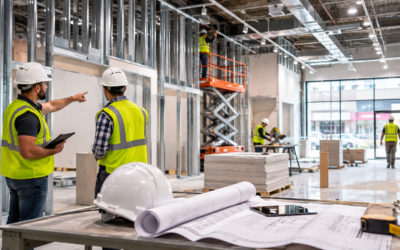
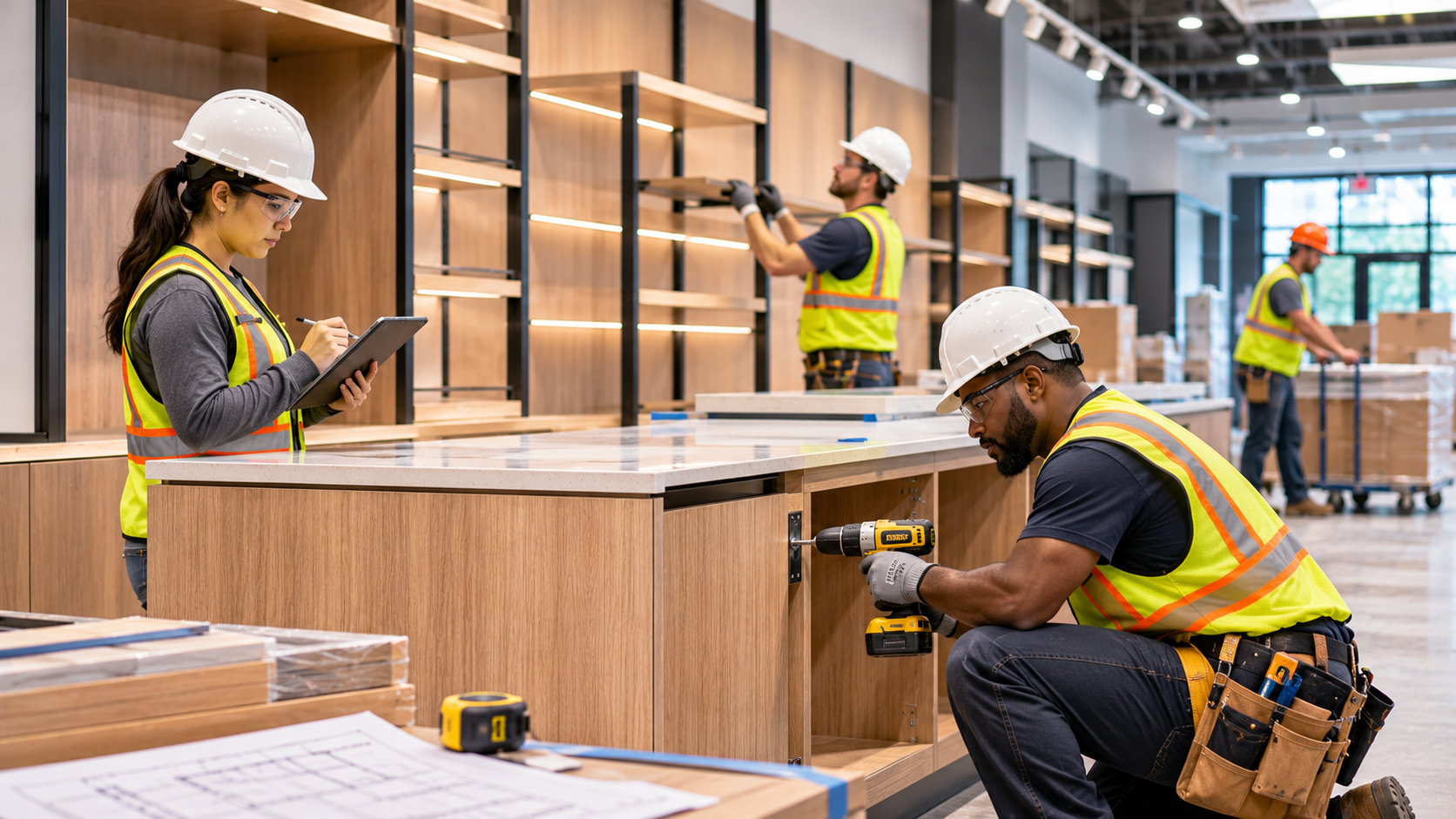
Fixtures and millwork play an important role in how commercial spaces look, function, and serve their customers. From retail shelving and display units to custom cabinetry, service counters, reception desks, and built-in storage, these elements influence both the appearance and usability of a finished environment.
However, successful fixture and millwork installation involves more than assembling components and securing them in place. It requires accurate measurements, proper site preparation, coordinated deliveries, skilled installation, and careful quality control.
These requirements become even more important in retail environments, where construction activities may take place within operating stores or across multiple locations with consistent brand standards.
Poor coordination can lead to damaged materials, alignment issues, installation delays, and costly rework. A structured installation process helps prevent these problems while supporting a finished space that meets design specifications and operational expectations.
What Are Fixtures and Millwork in Commercial Construction?
Fixtures and millwork are physical elements installed within a commercial space to support its function, appearance, and customer experience.
Although the terms are sometimes used together, they refer to different types of components.
Fixtures are generally functional or display-related elements used within a commercial environment. Examples include:
- Retail shelving and gondolas
- Product display units
- Checkout counters and point-of-sale stations
- Merchandising displays
- Wall-mounted storage systems
- Fitting room components
- Freestanding retail displays
Millwork typically refers to custom or manufactured wood-based architectural components and built-in elements. Examples include:
- Reception desks
- Custom cabinetry
- Built-in shelving
- Service counters
- Wall panels and decorative features
- Display cases
- Back-office storage
- Specialty woodwork and trim
Some commercial projects involve both categories, requiring coordination between fixture manufacturers, millwork suppliers, general contractors, and installation teams.
Understanding the scope and installation requirements of each component is the first step toward effective execution.
Why Proper Fixture and Millwork Installation Matters
Fixtures and millwork are often among the most visible elements of a completed commercial project. Their installation directly affects the appearance, usability, and overall quality of the space.
Even minor installation issues can become noticeable once the store opens or the facility returns to normal operations.
Proper installation helps achieve several important objectives.
1. Brand Consistency
Retail fixtures and millwork often follow specific design standards established by the client or brand.
Consistent placement, dimensions, finishes, and alignment help maintain the intended appearance across locations.
2. Functional Performance
Fixtures must be installed to support their intended use. Shelving should be stable, counters should be properly positioned, and storage systems should function as designed.
3. Customer and Employee Safety
Improperly secured fixtures, unstable shelving, sharp edges, and obstructed pathways can create safety concerns.
Correct installation and verification help reduce these risks.
4. Efficient Use of Space
Proper positioning ensures that fixtures support customer circulation, employee workflows, product accessibility, and available floor space.
5. Reduced Rework and Project Costs
Accurate measurements, proper preparation, and installation verification help prevent adjustments, material damage, and repeat site visits.
1. Review Plans, Specifications, and Installation Requirements Before Mobilization
Successful installation begins before materials arrive at the jobsite.
The project team should review construction drawings, fixture layouts, millwork details, manufacturer instructions, and applicable project specifications.
This review helps identify installation requirements and potential conflicts before field execution.
Important items to verify include:
- Fixture dimensions and quantities
- Millwork dimensions and finish specifications
- Mounting and anchoring requirements
- Required clearances
- Electrical and low-voltage connections
- Plumbing connections, where applicable
- Wall, floor, and ceiling conditions
- Installation sequence and trade dependencies
- Required tools, equipment, and personnel
The team should also confirm whether the supplied components match the approved drawings and specifications.
Any discrepancies should be addressed before installation begins.
For projects involving custom millwork or non-standard fixture configurations, early coordination is especially important because adjustments may require additional fabrication time.
2. Verify Site Conditions and Field Measurements
One of the most common sources of fixture and millwork installation problems is a difference between documented dimensions and actual field conditions.
Existing commercial facilities may have uneven floors, out-of-square walls, concealed obstructions, or other conditions that affect installation.
Before beginning work, the installation team should verify critical dimensions and compare them against approved plans.
A site assessment should consider:
- Floor elevations and levelness
- Wall alignment and structural conditions
- Available installation clearances
- Doorways and delivery access
- Existing electrical and plumbing locations
- Ceiling heights and overhead obstructions
- Existing fixtures or equipment that must remain
- Required customer and employee pathways
Field measurements should be documented and communicated to the project manager.
If actual conditions differ from the approved plans, the team should obtain direction before making modifications.
This is particularly important for custom millwork, where even small dimensional differences can affect fit, alignment, and finish quality.
3. Coordinate Deliveries, Material Handling, and Storage
Fixture and millwork components can be large, heavy, fragile, or sensitive to environmental conditions.
Poor delivery and storage coordination can result in damaged finishes, missing components, installation delays, and unnecessary handling.
The project team should establish a delivery plan that accounts for:
- Delivery schedules and receiving procedures
- Available unloading areas
- Building access and loading restrictions
- Material quantities and package identification
- Temporary storage locations
- Protection from moisture, dust, and impact
- Installation sequence and material staging
Materials should be inspected upon delivery for visible damage, missing components, and discrepancies.
Packaging should remain intact when appropriate to protect finished surfaces until installation.
Millwork materials may also require storage conditions that comply with manufacturer recommendations to reduce the risk of moisture-related movement, warping, or finish damage.
A coordinated delivery plan helps ensure that the right components are available when installation crews are ready to work.
4. Prepare the Work Area Before Installation
A properly prepared work area improves installation efficiency and helps protect both materials and existing property.
Before work begins, the team should confirm that preceding construction activities are sufficiently complete and that the installation area is ready.
Preparation may include:
- Removing debris and unnecessary materials
- Verifying floor and wall conditions
- Confirming required backing or blocking
- Completing necessary electrical and plumbing rough-ins
- Establishing safe work zones
- Protecting finished flooring and adjacent surfaces
- Confirming adequate lighting and power
- Identifying approved material staging areas
The installation sequence should also be coordinated with other trades.
For example, wall finishes, flooring, electrical connections, and millwork installation may have dependencies that affect the order of work.
Installing fixtures before the surrounding area is ready can expose finished components to damage or create unnecessary removal and reinstallation.
5. Follow Manufacturer Installation Instructions
Different fixture and millwork systems have different assembly, mounting, and installation requirements.
The installation team should follow the manufacturer’s approved instructions and project specifications rather than relying solely on general field practices.
These instructions may address:
- Required fasteners and hardware
- Anchoring methods
- Assembly procedures
- Weight limitations
- Mounting heights
- Required spacing and clearances
- Leveling and alignment
- Electrical or mechanical connections
- Finish protection and cleaning
Substituting hardware, modifying components, or changing mounting methods without approval can affect performance and potentially compromise safety.
When installation details are unclear, the team should request clarification from the manufacturer, supplier, designer, or appropriate project representative before proceeding.
6. Maintain Accurate Alignment, Leveling, and Spacing
Alignment is one of the most visible indicators of installation quality.
Even when individual fixtures are properly assembled, inconsistent positioning can make the completed space appear uneven or poorly finished.
Installation teams should verify:
- Consistent fixture heights
- Straight and level shelving
- Proper spacing between display units
- Alignment with adjacent cabinetry and millwork
- Consistent reveals and gaps
- Correct positioning relative to walls and architectural features
- Proper door and drawer operation
- Consistent hardware placement
Laser levels, measuring tools, templates, and other appropriate equipment can help maintain accuracy.
For projects involving multiple identical fixtures, establishing a reference point or installation template can improve consistency throughout the space.
This becomes particularly important in larger retail environments, where visual alignment must remain consistent across departments and product display areas.
7. Coordinate Electrical, Low-Voltage, and Other Connections
Many commercial fixtures and millwork components require connections beyond basic assembly and mounting.
Checkout counters, service desks, display systems, and specialty fixtures may incorporate electrical outlets, lighting, data connections, network cabling, or other supporting infrastructure.
These requirements should be coordinated before installation.
The project team should verify:
- Electrical rough-in locations
- Power requirements
- Data and communication connections
- Cable routing and concealment
- Access to junction boxes and service points
- Lighting integration
- Equipment ventilation requirements
- Required testing and verification
Connections should be completed by appropriately qualified personnel in accordance with applicable codes, project specifications, and manufacturer requirements.
Coordination between fixture installers, electricians, and technology installation teams helps reduce conflicts and prevents completed millwork from having to be modified unnecessarily.
8. Protect Finished Surfaces and Adjacent Construction
Fixture and millwork installation often takes place after other portions of a commercial project have been completed.
This creates a risk of damaging flooring, painted surfaces, wall finishes, doors, and previously installed components during material movement and installation.
Protective measures should be established before work begins.
These may include:
- Floor protection along delivery and installation routes
- Corner guards and surface coverings
- Protective padding for finished components
- Controlled material handling
- Designated equipment movement paths
- Organized tool storage
- Immediate removal of packaging and debris
Workers should also avoid placing heavy components directly against finished surfaces unless appropriate protection is provided.
Protecting completed work reduces repair costs and helps preserve the overall quality of the project.
9. Coordinate Installation in Active Commercial Environments
Fixture and millwork installation can be more complicated when construction takes place inside an operating store or occupied commercial facility.
Customer access, employee workflows, operating hours, and safety requirements must be considered alongside installation productivity.
Depending on the project, the team may need to:
- Establish clearly defined work zones
- Install temporary barriers and protective coverings
- Schedule disruptive activities during approved off-hours
- Coordinate deliveries around operating requirements
- Maintain safe customer and employee pathways
- Secure tools and materials when work is paused
- Clean affected areas before reopening them
- Communicate schedule changes with facility management
For larger projects, phased installation can allow completed areas to return to service while work continues elsewhere.
Read more about retail construction in open stores and minimizing customer impact during active store projects.
10. Use Standardized Installation Procedures for Multi-Site Programs
Multi-location fixture and millwork programs introduce additional coordination requirements.
A design that works at one location may need adjustments at another because of differences in building dimensions, existing conditions, access, or operational requirements.
At the same time, clients often expect consistent installation quality and brand presentation across every location.
Standardized installation procedures help establish repeatable expectations.
A multi-site installation program should define:
- Approved fixture and millwork specifications
- Standard installation details
- Field measurement requirements
- Material receiving and inspection procedures
- Installation sequencing
- Quality-control checkpoints
- Photo documentation requirements
- Deficiency reporting and resolution
- Final acceptance criteria
Site-specific conditions should be documented and evaluated rather than handled through unapproved field modifications.
A consistent process allows project teams to maintain standards while addressing legitimate differences between locations.
For additional guidance, see our article on what makes a successful multi-site rollout.
11. Perform Quality Checks and Final Inspections
Installation should not be considered complete simply because all components are in place.
A final inspection verifies that fixtures and millwork meet the approved specifications, function as intended, and are ready for use.
Quality checks should include:
Installation accuracy
Verify dimensions, spacing, alignment, mounting heights, and positioning against approved plans.
Structural stability
Confirm that fixtures and millwork are properly secured using the specified mounting and anchoring methods.
Functional performance
Check doors, drawers, adjustable shelving, hardware, and other moving components.
Finish quality
Inspect for scratches, dents, chips, gaps, uneven surfaces, and visible installation damage.
Connection verification
Confirm that required electrical, data, lighting, or other connections have been completed and tested by qualified personnel.
Site condition
Verify that packaging, debris, tools, and temporary protection have been removed as appropriate.
Documentation
Record completed work, outstanding deficiencies, and any approved field changes.
Deficiencies should be documented, assigned, and resolved before final acceptance.
12. Complete Closeout and Turnover Documentation
Proper closeout helps ensure that the client receives a complete record of the installed work.
Depending on the project requirements, turnover documentation may include:
- Completed installation checklists
- Photographic documentation
- Deficiency and correction records
- Approved field changes
- Manufacturer warranties
- Product and maintenance information
- Inspection and testing records
- Final acceptance documentation
For multi-site programs, consistent closeout procedures make it easier to compare installation results and verify completion across locations.
A structured closeout process also reduces uncertainty when future maintenance, repairs, or additional installations are required.
Common Fixture and Millwork Installation Mistakes to Avoid
Even relatively straightforward installation projects can experience delays and quality issues when important details are overlooked.
Common mistakes include:
Skipping Field Verification
Relying entirely on drawings without checking actual site conditions can lead to dimensional conflicts and improper fit.
Installing Before the Area Is Ready
Incomplete flooring, wall finishes, electrical rough-ins, or other preceding work can create installation conflicts and damage finished components.
Poor Material Handling
Improper unloading, storage, or movement can damage finishes and delay installation.
Ignoring Manufacturer Specifications
Using incorrect fasteners, mounting methods, or assembly procedures can affect stability and performance.
Inadequate Trade Coordination
Failing to coordinate electrical, low-voltage, and other connections can result in rework or inaccessible service points.
Inconsistent Installation Standards
Different installation methods across locations can create visible variations in quality and brand presentation.
Incomplete Quality Control
Failing to inspect alignment, stability, finish quality, and functionality can leave deficiencies unresolved until after turnover.
How to Measure Fixture and Millwork Installation Performance
Installation performance should be evaluated using both schedule and quality indicators.
For larger projects and multi-site programs, consistent reporting can help identify recurring issues and improve future execution.
| Performance Indicator | What It Measures |
| Installation schedule adherence | Completion against planned installation milestones |
| First-pass quality | Percentage of installations accepted without corrective work |
| Damage frequency | Materials or fixtures damaged during delivery, handling, or installation |
| Rework rate | Amount of additional work required to correct installation issues |
| Material readiness | Availability of correct materials before scheduled installation |
| Installation productivity | Completed units or areas compared with planned production |
| Deficiency resolution | Time required to correct identified issues |
| Closeout completion | Timely submission of required documentation and final records |
Tracking these indicators helps project managers evaluate installation quality, resource utilization, and overall program performance.
What to Look for in a Commercial Contractor for Fixture and Millwork Installation
Selecting the right contractor is important when fixture and millwork installation involves multiple trades, tight deadlines, or numerous locations.
A qualified commercial contractor should demonstrate the ability to coordinate the full installation process, from site readiness through final closeout.
Consider the following capabilities:
Pre-installation planning: Can the contractor review drawings, verify field conditions, and identify installation requirements before mobilization?
Material coordination: Can the team manage deliveries, receiving, storage, and material readiness?
Installation management: Does the contractor have the project oversight and field resources to coordinate installation activities?
Trade coordination: Can electrical, low-voltage, and other supporting requirements be integrated into the installation plan?
Quality control: Are inspection procedures, documentation standards, and deficiency-resolution processes established?
Multi-site execution: Can the contractor maintain consistent installation standards across multiple commercial locations?
Operational awareness: Does the team understand how to coordinate work within active stores and occupied facilities?
The right contractor should be able to balance installation quality, schedule requirements, and the operational needs of the facility.
How Prime Retail Services Supports Fixture and Millwork Programs
Prime Retail Services is a nationwide commercial general contractor supporting construction, renovation, and multi-location programs across retail and other commercial environments.
Our capabilities include remodels and renovations, build-outs and refreshes, special project rollouts, and multi-site FF&E programs.
Fixture and millwork installation requires coordination between materials, site conditions, installation teams, and other construction activities. Our approach emphasizes centralized project oversight, field coordination, and consistent execution processes.
Through our proprietary 3P Process, Perfect, Project, Process, we focus on execution quality, project coordination, and repeatable processes that support consistent results across locations.
Our project capabilities include:
- Multi-Site FF&E Programs: Coordinated fixture, furniture, and equipment installation across multiple commercial locations.
- Remodels and Renovations: Integration of fixture and millwork installation into broader commercial improvement projects.
- Build-Outs and Refreshes: Coordinated installation activities supporting updated commercial spaces and customer-facing environments.
- Special Project Rollouts: Project coordination for time-sensitive installation and deployment requirements.
- Electrical and Technology Coordination: Additional project support through Prime Power Solutions and Prime-Net when electrical or technology infrastructure is part of the scope.
With general contracting licenses in 49 states, excluding Hawaii, Prime Retail Services supports commercial construction requirements across a broad geographic footprint.
Our focus is to help clients manage installation programs through organized planning, coordinated execution, and consistent project oversight.
Frequently Asked Questions
What is the difference between fixture installation and millwork installation?
Fixture installation generally involves assembling and positioning functional or display-related components such as shelving, counters, and retail displays. Millwork installation typically involves custom or manufactured architectural components such as cabinetry, reception desks, built-in shelving, and service counters.
What should be checked before installing commercial fixtures?
The team should verify approved drawings, actual site dimensions, floor and wall conditions, mounting requirements, material availability, electrical connections, and installation clearances.
Why is field measurement important for millwork installation?
Field measurements confirm that custom components will fit actual site conditions. They help identify dimensional differences, obstructions, and alignment issues before installation begins.
How can installation damage be prevented?
Proper material handling, designated delivery routes, protective floor coverings, organized staging areas, and careful installation practices help reduce damage to fixtures, millwork, and surrounding finishes.
Can fixture and millwork installation take place while a store remains open?
Yes, depending on the project scope and site conditions. Contractors may use phased installation, temporary barriers, controlled work zones, and approved off-hours schedules to reduce disruption while maintaining safety.
How are fixture and millwork installations coordinated across multiple locations?
Multi-site programs typically use standardized specifications, installation procedures, quality-control checklists, reporting requirements, and centralized project management. Site-specific conditions are assessed and addressed within the established program standards.
What causes fixture and millwork installation delays?
Common causes include inaccurate field measurements, incomplete site preparation, damaged or missing materials, delivery delays, unresolved design questions, trade coordination conflicts, and unapproved field modifications.
What should be included in fixture and millwork installation closeout?
Closeout may include completed installation checklists, photographs, deficiency records, approved field changes, warranties, inspection records, and final acceptance documentation.
Final Thoughts
Fixture and millwork installation has a direct impact on the quality, functionality, and appearance of a completed commercial space.
Achieving consistent results requires more than skilled installation. It depends on accurate field verification, coordinated procurement, proper site preparation, trade alignment, and thorough quality control.
For commercial construction and multi-site programs, these practices become especially important as installation teams work across different locations, facility conditions, and operational requirements.
With a structured installation process and effective project oversight, contractors can help ensure that fixtures and millwork are installed accurately, consistently, and in accordance with project expectations.
Planning a commercial fixture, millwork, or multi-site FF&E program?
Contact Prime Retail Services at info@primeretailservices.com to discuss your next commercial construction project.