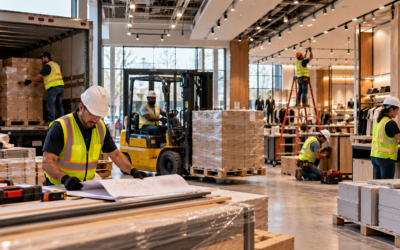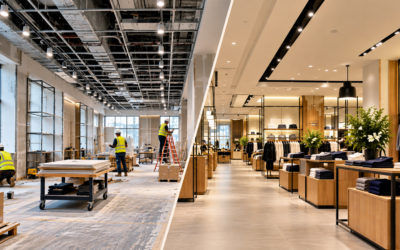
Commercial construction projects inside operating stores require more than careful scheduling and quality workmanship. They require a clear strategy for protecting the customer experience while construction activities take place.
For retailers, even a relatively small renovation can affect how customers enter the store, navigate departments, access products, interact with employees, and complete purchases. Noise, dust, temporary closures, equipment, and restricted access can create frustration if they are not properly managed.
The challenge for a general contractor is to complete the work efficiently without making construction a disruption to everyday business.
Successful execution starts with understanding how construction activities affect store operations and planning around the people who depend on the space. With the right coordination, communication, scheduling, and site controls, contractors can make meaningful progress while helping retailers maintain a safe, accessible, and positive shopping environment.
Why Customer Experience Matters During Active Store Projects
When construction takes place in an operating store, customers experience the project differently than the construction team does.
A contractor may see a temporary barricade as a necessary site control. A customer may see an inaccessible aisle or an unexpected detour. A construction crew may consider a noisy activity routine, while shoppers may find it disruptive.
These small inconveniences can accumulate and affect the overall shopping experience.
Common customer-facing challenges include:
-
Restricted access to products, departments, or checkout areas
-
Construction noise during peak shopping hours
-
Dust, debris, and unpleasant odors
-
Temporary changes to store entrances and traffic flow
-
Equipment, materials, and tools near customer areas
-
Confusing signage or poorly marked detours
-
Reduced parking or accessibility
-
Construction activities that interfere with store employees
These issues are not always avoidable, but they can be anticipated and managed through proper project planning.
For additional perspective, see our article on retail construction in open stores.
1. Plan Construction Around Store Operations
One of the most effective ways to minimize customer impact is to build the construction schedule around the store’s operating requirements.
A standard construction schedule may prioritize trade availability, material delivery, and task sequencing. An active-store project must also account for customer traffic, employee workflows, delivery schedules, and business-critical activities.
Before work begins, the project team should coordinate with store management to understand:
-
Operating hours and peak shopping periods
-
High-traffic departments and customer pathways
-
Checkout locations and service areas
-
Receiving and inventory schedules
-
Employee access and operational requirements
-
Special promotions, seasonal events, and high-volume periods
-
Areas that must remain accessible throughout construction
This information helps the contractor determine when and where specific activities can take place.
For example, disruptive work near a primary customer entrance may need to be scheduled outside peak hours. Work affecting a frequently used department may require temporary access arrangements or a phased construction approach.
The objective is to maintain a realistic construction schedule without compromising the store’s ability to serve customers.
2. Establish Clear Construction Zones
Construction areas should be clearly separated from active customer spaces.
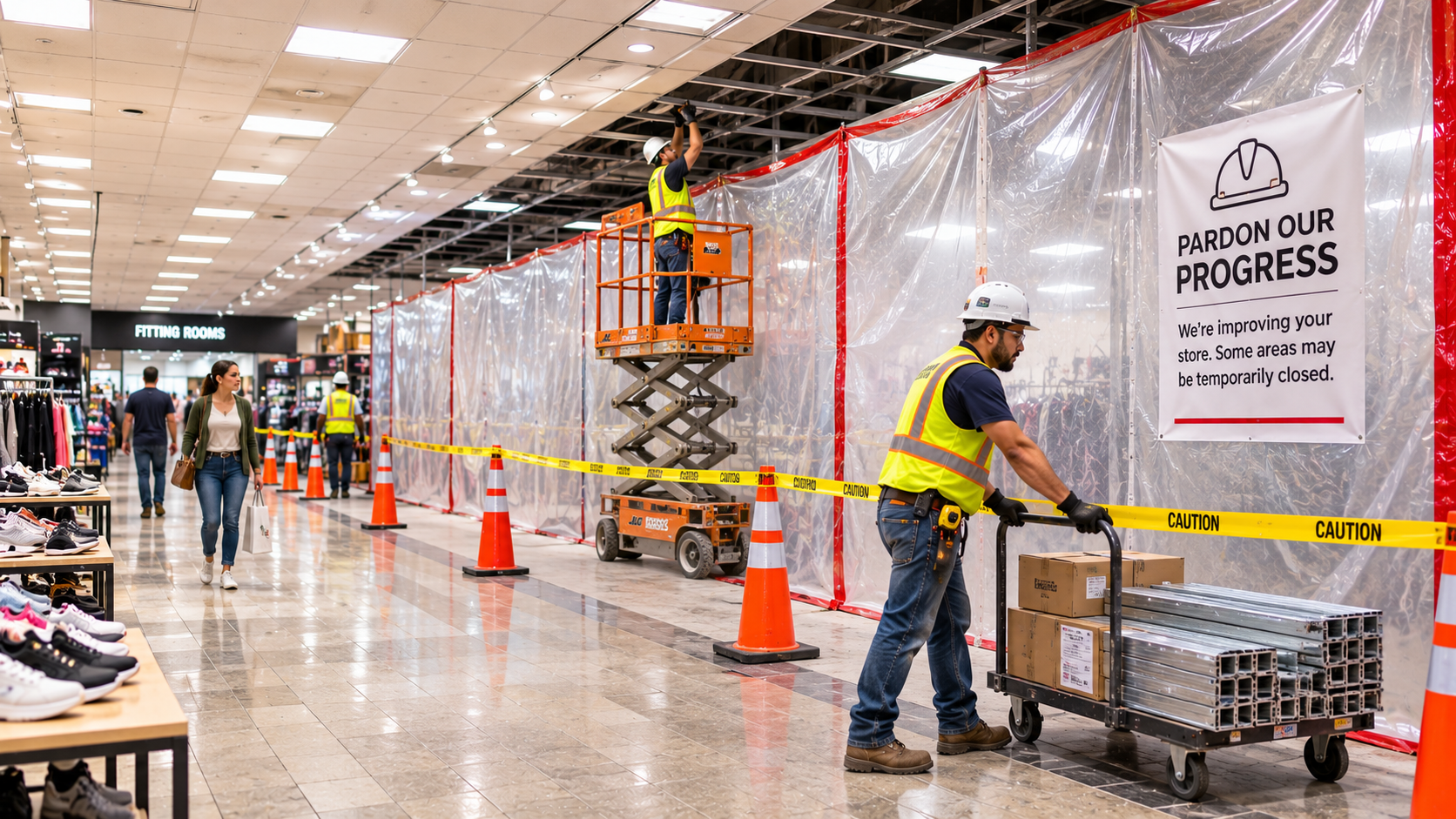
Properly established work zones help protect shoppers and employees while allowing construction crews to complete their assigned activities.
Depending on the project scope, site controls may include:
-
Temporary partitions and protective barriers
-
Clearly marked construction boundaries
-
Controlled access points for authorized personnel
-
Protective floor coverings
-
Dust containment systems
-
Warning signs and directional signage
-
Secure material and equipment storage areas
These controls should be established before construction begins and maintained throughout the project.
Barriers must also be appropriate for the environment. They should prevent unauthorized access without creating unnecessary obstructions or making the store difficult to navigate.
A well-managed construction zone provides a clear distinction between active work areas and spaces that remain open to customers.
3. Maintain Safe and Accessible Customer Pathways
Customer access should remain a priority throughout an active store project.
Temporary construction conditions can change how people move through a retail environment. Aisles may become narrower, entrances may be redirected, and certain departments may require temporary closures.
Without proper planning, these changes can create confusion, congestion, and potential safety concerns.
Contractors should coordinate with store management to maintain:
-
Safe and clearly identified customer pathways
-
Access to essential departments and services
-
Unobstructed emergency exits
-
Accessible routes for individuals with disabilities
-
Clear access to checkout areas
-
Safe transitions between finished and active construction areas
Temporary detours should be easy to understand and should not direct customers through construction zones.
Where required, alternate routes should be established before existing pathways are restricted. Signage should be visible, consistent, and positioned where customers can make decisions before reaching an obstruction.
Maintaining accessibility is not simply a matter of convenience. It is an important part of safe and responsible project execution.
4. Control Dust, Noise, and Other Construction Disruptions
Construction activities can introduce conditions that affect the shopping environment, particularly when work involves demolition, cutting, drilling, sanding, or equipment operation.
Dust, noise, odors, and vibration should be addressed before they become customer complaints or operational problems.
Effective controls may include:
Dust management
Use appropriate containment, protective coverings, and cleanup procedures to prevent dust from spreading into active store areas.
Noise management
Schedule loud activities during approved low-traffic periods whenever possible. Coordinate disruptive work with store management before execution.
Odor control
Select appropriate materials and products for the environment. Plan activities involving adhesives, coatings, or other odor-producing materials with adequate ventilation and operational coordination.
Housekeeping
Keep work areas organized and remove debris regularly. Tools, materials, and equipment should not be left in customer-facing spaces.
Daily cleanup
Inspect affected areas before reopening them to customers or allowing normal store activities to resume.
The goal is to contain the effects of construction rather than allowing them to spread throughout the store.
5. Use Phased Construction to Keep Essential Areas Open
For projects involving multiple departments or larger sections of a store, phased construction can help maintain business continuity.
Instead of closing an entire area at once, the contractor divides the work into manageable phases. Each phase is completed, inspected, and prepared for use before the next area is taken offline.
A phased approach may involve:
1. Identifying the areas that can be temporarily restricted.
2. Establishing alternate customer and employee access.
3. Completing construction within the designated work zone.
4. Performing cleanup and necessary inspections.
5. Reopening the completed area.
6. Moving construction activities to the next phase.
This approach can be particularly useful for store refreshes, department renovations, flooring replacements, fixture installations, and other projects that affect customer-facing spaces.
Phasing requires careful coordination. The sequence must account for trade dependencies, material availability, temporary access requirements, and the store’s operational priorities.
When properly planned, it allows construction to progress without unnecessarily disrupting the entire facility.
6. Schedule Disruptive Work During Off-Hours When Possible
Some construction activities are difficult to perform safely or efficiently while customers are present.
Demolition, heavy equipment operation, overhead work, electrical modifications, and certain installations may be better suited for overnight or other approved off-hours schedules.
After-hours construction can reduce customer exposure to noise, equipment movement, and temporary access restrictions.
However, working outside normal business hours introduces additional coordination requirements, including:
-
Building access and security procedures
-
Approved work schedules
-
Trade partner availability
-
Material delivery coordination
-
Lighting and temporary power
-
Safety inspections
-
Cleanup and reopening procedures
The contractor must also account for the time needed to prepare the area for business before customers return.
An overnight work window is only successful when the team can complete the planned activities, secure the site, and leave the affected areas ready for normal operations.
Read more about best practices for after-hours retail construction.
7. Coordinate Closely With Store Management
Store management provides important operational insight that construction teams cannot always identify through drawings or site assessments alone.
Managers understand customer traffic patterns, employee responsibilities, delivery schedules, security procedures, and the areas that are most important to daily operations.
Regular communication helps the construction team anticipate potential conflicts and respond before they affect customers.
Coordination should cover:
-
Daily or weekly work schedules
-
Upcoming disruptive activities
-
Areas affected by construction
-
Changes to customer access
-
Material deliveries and equipment movement
-
Safety concerns and site conditions
-
Work completion and reopening expectations
A designated point of contact on both the construction and store sides can also help prevent confusion and keep decisions moving.
Communication should continue throughout the project, not just during preconstruction. Conditions can change, and the team must be prepared to adjust its approach when necessary.
8. Keep Employees Informed and Prepared
Store employees are often the first people customers approach when construction affects their shopping experience.
If employees do not know which areas are restricted, where customers should go, or how long a disruption will last, they may struggle to provide accurate information.
Before affected work begins, store personnel should receive clear information about:
-
Construction schedules and affected areas
-
Temporary entrance or aisle changes
-
Alternate routes and available services
-
Expected noise or other disruptions
-
Restricted areas and safety requirements
-
Anticipated reopening times
Construction teams should also provide timely updates when schedules or access arrangements change.
Keeping employees informed helps create a more consistent customer experience and reduces unnecessary confusion during the project.
9. Prepare for Unexpected Conditions
Even well-planned projects can encounter unexpected conditions.
Hidden site issues, delayed materials, equipment problems, weather-related delivery interruptions, or changes in store operations may require adjustments to the construction schedule.
The key is to have a process for responding without creating unnecessary disruption.
A practical response plan should establish:
-
Who has authority to make field decisions
-
How changes are communicated to store management
-
Which activities can be resequenced
-
What temporary controls are required
-
How customer access will be maintained
-
What conditions must be resolved before an area reopens
Construction teams should also identify alternative work activities that can proceed if a planned task becomes unavailable.
This helps maintain productivity while avoiding unnecessary pressure to perform work under unsafe or unsuitable conditions.
For projects involving unexpected scope or changing site conditions, see our article on managing non-standard retail construction projects.
10. Verify the Site Before Returning Areas to Normal Use
Completing the construction task does not automatically mean an area is ready for customers.
Before reopening an affected space, the project team should verify that the area is safe, clean, accessible, and ready for normal store operations.
A closeout inspection should consider:
-
Removal of construction debris and unused materials
-
Proper installation and condition of fixtures
-
Safe flooring transitions and walking surfaces
-
Functioning lighting and electrical components
-
Clear and unobstructed pathways
-
Removal of temporary barriers and signage when appropriate
-
Completion of required inspections and testing
-
Resolution of outstanding safety or quality issues
Store management should be included in the reopening process when appropriate.
This final verification helps prevent unfinished work, overlooked hazards, or unnecessary follow-up visits from affecting the customer experience.
How to Measure Customer Impact During Construction
Minimizing disruption should be treated as an operational objective, not simply an informal expectation.
Project teams can monitor several indicators to evaluate how effectively construction activities are being managed.
| Performance Indicator | What It Measures |
| Customer access interruptions | Frequency and duration of restricted access |
| Schedule adherence | Whether planned activities are completed within approved work windows |
| Safety incidents | Incidents involving customers, employees, or construction personnel |
| Customer complaints | Feedback related to construction conditions |
| Cleanup compliance | Whether affected areas are cleaned before reopening |
| Rework and return visits | Additional work that creates repeated disruption |
| Store coordination | Timeliness of communication and operational updates |
| Closeout performance | Whether affected areas are returned to service as planned |
These indicators help project teams identify recurring problems and improve execution across future projects.
For multi-location programs, consistent reporting also makes it easier to identify which locations or construction activities require additional planning.
The Role of a General Contractor in Protecting the Customer Experience
Minimizing customer impact requires coordination across multiple parts of a construction project.
The general contractor must align field personnel, subcontractors, materials, schedules, safety requirements, and store operations around a common execution plan.
This includes more than completing construction within the approved scope. It means understanding how the work affects the operating environment and making decisions that support both project objectives and business continuity.
An experienced commercial general contractor should be prepared to:
-
Develop construction schedules around operating requirements
-
Coordinate multiple trades within active commercial environments
-
Establish appropriate site protection and containment
-
Maintain safe customer and employee access
-
Manage material deliveries and equipment movement
-
Communicate with store leadership
-
Adjust field activities when conditions change
-
Verify completed work before reopening affected areas
Effective project management is central to this process. Learn more about why project management matters in retail construction.
How Prime Retail Services Approaches Construction in Operating Environments
Prime Retail Services is a nationwide commercial general contractor supporting construction, renovation, and multi-location programs across retail and other commercial environments.
Our approach emphasizes coordinated planning, controlled execution, and consistent project oversight, particularly when construction takes place in active facilities.
Through our proprietary 3P Process, Perfect, Project, Process, we focus on execution quality, project coordination, and repeatable processes that support consistent results.
Our capabilities include:
-
Remodels and Renovations: Coordinated construction activities designed around existing facility conditions and operational requirements.
-
Build-Outs and Refreshes: Planned execution of interior improvements, fixture installations, and space updates.
-
Special Project Rollouts: Coordinated deployment for time-sensitive and multi-location construction needs.
-
Multi-Site FF&E Programs: Management of fixture, furniture, and equipment installations across multiple locations.
-
Electrical and Technology Coordination: Integrated support through Prime Power Solutions and Prime-Net when project requirements call for these capabilities.
With general contracting licenses in 49 states, excluding Hawaii, Prime Retail Services supports commercial projects across a broad geographic footprint.
Our focus is to help clients complete construction work with the planning, communication, and execution discipline needed to protect their operating environments.
Frequently Asked Questions
Can a store remain open during construction?
Yes. Many commercial renovation and improvement projects can be completed while a store remains operational. The approach depends on the project scope, site conditions, safety requirements, and the ability to separate construction activities from customer and employee areas.
How can construction minimize disruption to customers?
Effective strategies include phased construction, off-hours scheduling, temporary barriers, clear directional signage, dust and noise controls, and maintaining safe customer pathways.
What types of retail projects can be completed in an open store?
Depending on the scope and conditions, projects such as fixture installations, flooring replacements, department refreshes, electrical upgrades, and selected renovations may be completed while the store remains open.
When should construction take place after business hours?
After-hours work is often appropriate when activities create significant noise, dust, access restrictions, or safety concerns. The decision should be based on the project requirements, store operating schedule, and approved work windows.
Who is responsible for coordinating construction with store operations?
The general contractor typically coordinates construction activities with store management, client representatives, subcontractors, and other project stakeholders. Clear responsibilities and communication procedures should be established before work begins.
How do contractors maintain safety while customers are present?
Contractors use controlled work zones, temporary barriers, appropriate signage, housekeeping procedures, safe access routes, and ongoing site inspections. Safety controls should be reviewed and adjusted as construction conditions change.
What is the biggest challenge when renovating an operating store?
One of the biggest challenges is balancing construction productivity with the store’s operational requirements. Contractors must coordinate schedules, access, trade activities, and site conditions without compromising safety or unnecessarily affecting customers.
Final Thoughts
Construction in an active store requires a different level of planning and coordination than work performed in an unoccupied facility.
Every construction activity has the potential to affect customer access, employee workflows, and daily operations. Managing those effects requires more than placing barriers around a work area. It requires understanding how the store functions and organizing construction around those realities.
With disciplined scheduling, clear communication, controlled work zones, and consistent project oversight, commercial construction teams can make progress while helping retailers maintain a safe and positive customer experience.
Planning a renovation or construction program in an operating facility?
Contact Prime Retail Services at info@primeretailservices.com to discuss your next commercial construction project.